
Editor’s Note: RVA Magazine is proud to partner with Virginia PrideFest, happening this Saturday, September 12, and to produce the annual Pride Guide celebrating Richmond and Virginia’s LGBTQ+ community. You can download the 2026 Pride Guide HERE.
We’d also like to thank the following sponsors who made the 2026 Pride Guide possible: Virginia Museum of History & Culture, Virginia MOCA, Virginia Repertory Theatre, Richmond Triangle Players, Health Brigade, Godfrey’s, Chrysler Museum of Art, and River Fox Realty.
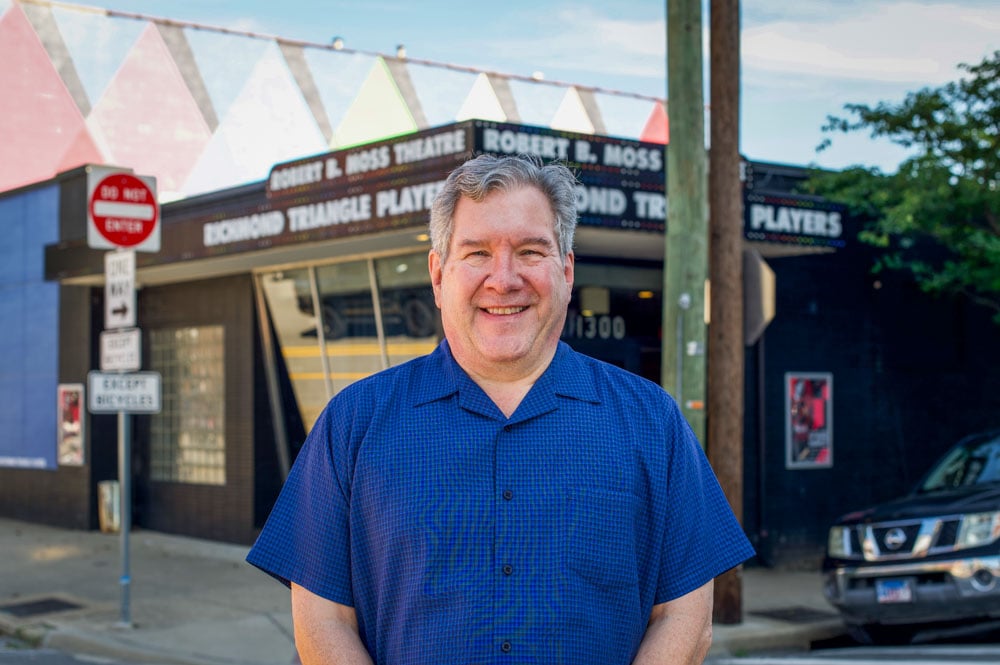
What a kick it is to hang out with Philip Crosby, executive director of Richmond Triangle Players. We spent a good hour talking about a range of topics du jour in the queer communities RTP serves. The joys, the fears, lessons learned, trends being realized and eulogized. All of these things were yapped about with a distinct degree of wisdom.
His is a wisdom born of thirty-five years in Richmond queer-focused art. There is a lot to be said about the history of Triangle, but as Philip put it, “It’s all online. Google it.”
This is a temperature check on the entire queer diaspora through the lens of performative art aimed directly at them. We started at the beginning. The conversation was detailed and long. This is hardly the totality of it.
This is simply the one-act version.
Christian Detres: Hi! It’s great to finally meet you in person, Philip! I’m especially happy to be doing this for the Pride Guide. Richmond Triangle Players is a rare badge our city wears proudly. There are so very few theatre companies in the US that have a mission to serve the queer community as wholeheartedly as you get to. How do you maintain this? What’s the atmosphere that RTP exists in?
Philip Crosby: Well, I guess the best way to explain my role as the executive director of the theatre is that I make sure everything actually happens the way it is supposed to. I make sure everyone gets paid. Lucian Restivo, our artistic director, keeps up with all the new plays, maintains relationships with our sister theatres in NYC, and keeps us in the mix of like-minded companies. It’s through his artistic leadership, along with me keeping the ship off the rocks, that we maintain our status as one of the most storied, and few, LGBTQ-focused theatres in the country.
There are about fifteen to twenty queer theatres that have been around as long as we have. 2026 makes this thirty-four years for us. There’s a sort of graduating class from that era that has dwindled with time due to general hardships and changes in leadership. There’s also a handful of post-COVID new organizations that are taking up the torch with a new generational focus that is exciting to see.
The ones our age came out of the backlash against the AIDS epidemic. Everyone was scared back then. If you look at queer history in the early Eighties, there were notable successes with queer stories, like Harvey Fierstein’s Torch Song Trilogy and La Cage aux Folles (The Birdcage, for the more film-focused of us). This was leading to a huge cultural opening in our lane, and then AIDS blew up and no one wanted to touch these stories anymore.
CD: Did AIDS change the tone, overall, for queer-centric stories? Because the two you just mentioned are funny, not exactly light storytelling, but they’re fun in a darkly humorous way. La Cage aux Folles specifically is about queer and straight culture butting heads, a story of reluctant acceptance and family, but in the end, it results in buried hatchets and wedding bells. It’s also absolutely hilarious. I’d consider it a massive step forward to cultural understanding. The loving, gay couple as real parents, not caricatures for ridicule and suspicion. But it doesn’t flinch from the real obstacles that were of the time and, sadly, the ones that persist.
PC: Well, yeah, the epidemic did change the tone. Because of AIDS, you had a slew of direct response plays amidst the government’s perverse lack of response to it. There was a trend towards AIDS stories, conflated as “gay stories,” as to give the impression this is the defining nature of being queer in the late 20th century. But there was always someone dying in these works. The tonal shift to tragedy was suffocating. Those stories are important, but the effect is a dour countenance over the entire experience of queerdom and the art made in reflection of it. There was a sense of alarm. These were stories we had to hear, even if we didn’t want to continuously torture ourselves with them.
I am a huge believer that telling stories changes the world. Transformation of mind is handed down from storyteller to audience, and audience to acquaintances as they recount their experiences. Some of the work we do here is allowed to be light and frivolous. I mean, our rendition of Golden Girls last holiday season didn’t have a serious bone in its body. The fact that we’re specifically inclusive to everyone encourages the diversity of representation, dramatically so for trans and queer people of color. Moving past the trauma porn of the AIDS era has allowed for an expansion in conversation, joy, positive expression and representation we are all happy to experience.
CD: I’m old enough to remember the AIDS era and the media shift that moved us past it, at least in the arts. I remember being ten and thinking it was clever to call my friends the “f” word as we inexpertly insulted each other for laughs. I remember being 16, just a few years later, and the thought of doing that (at least in the punk/activist communities I frequented) was sickening and likely to get you socked in the mouth. There was a broader coalition of progressive minds that extended to TV and film.
PC: Yeah, the “gay best friend” returned!
CD: Oh, the gay best friend was everywhere. I’d say even more than that, though, is that you had hit shows anchored by their gay characters. Will & Grace comes to mind. I know it’s an imperfect example, but even the episodes of Seinfeld that had the “tough guys” gay couple were significant. Up to then, we were never sold “gay” people as anything but one-note punchlines, jokes always defined by the “lack” of traditional masculinity. But in the 1990s, there was a massive media push to incorporate the gay experience into the common American experience.
I would say the film Philadelphia put the cork in the genie bottle of AIDS stories. It hit the high note and brought the house down on the subject. Of course, there were other contemporary works on stage and film on the subject, but these stories humanized the community to the point they could start talking about other stuff.
And that takes me to the time we’re living in right now. Groan. The media, which has been captured by people deliberately trying to roll back the gains the queer diaspora has made since the 90s, has been selling a story of fear to consolidate power. I’m not even sure they believe what they’re selling at all. They just know that the easily manipulated, who are often the least-traveled, least curious, and most insulated by institutional thought, will eat up those narratives all day. The pain they dole out is only a side effect of their will to power, and they couldn’t care less. How has the theater community responded to the Trump era?
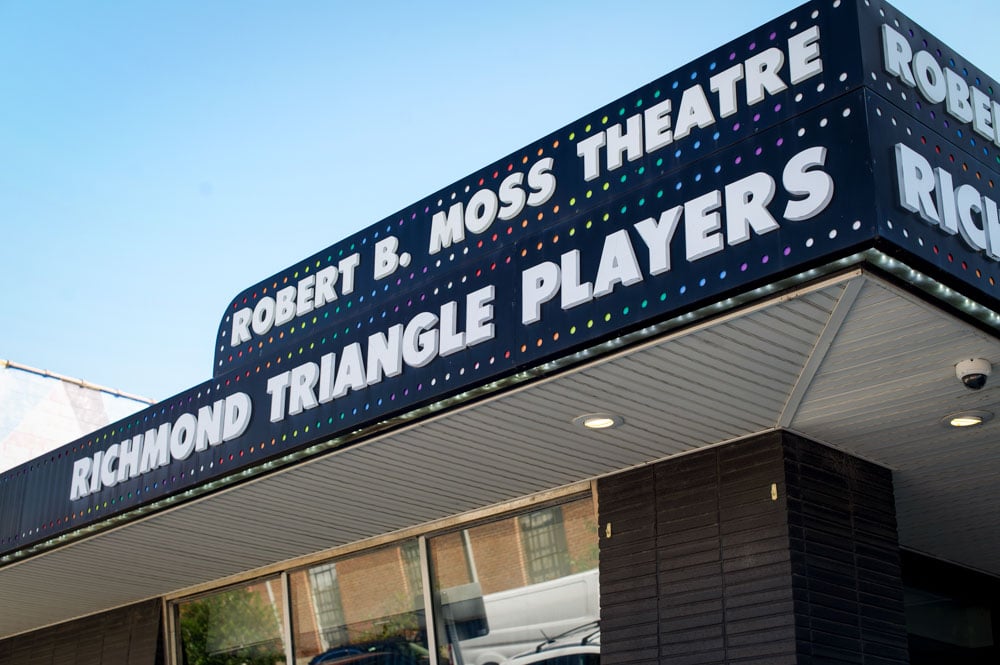
PC: It’s interesting you ask that, because we had enjoyed some great acclaim just past our 20th anniversary, in 2012, when we bought this building. We had produced A Chorus Line to great success. We were enjoying a lot of cultural goodwill. And then Trump happened. The first Trump administration found this fear tactic scapegoating drag queens and harped on it to an absurd degree. Little did we know that it would get exponentially worse, but the opposition was still formidable.
CD: Could you even imagine being afraid of drag queens? I mean, really.
PC: Seriously unreal. Back then, we had booked Mrs. Kasha Davis, famously of RuPaul’s Drag Race. She has a great persona, and in her hometown of Rochester, NY, performs a lovely kid’s story hour, Imagination Station. Every Saturday. It’s Captain Kangaroo, Mr. Rogers’ Neighborhood, but with a big outrageous person in a costume and a wig. Kids understand this. They ‘get’ dressing up. They love costumes and pretending. There is no issue for them in this setting.
So I thought this would be very cool to bring here to Richmond. We would do an adults show here at the theatre, and then Imagination Station, maybe the library or something.
But in the months before that was to happen, The Children’s Museum scheduled a night for non-cis conformative families to bring their kids to visit the legendary “Santa,” along with a different kind of Snow Queen, which in this case was Grace Sweatpants (edit: my dear old friend Michael-Birch Pierce). This purely wholesome and anticipated event was getting the museum director actual death threats. Death threats. They kept the event, but they pulled all advertising and promotion for it. They had to hide it.
At that point, I was like, “I can’t.” I was not ready to play that role in having to look over everyone’s shoulders for actual threats of violence. We very reluctantly canceled the story hour.
That was heartbreaking. It’s really difficult to be looked at as dangerous people. All the old tropes are so damaging, false, and depressing. Like, if you’re gay, you’re just out to groom people, even kids, into “turning gay.” We used to have self-imposed rules on never casting anyone under 18, so as not to invite that commentary. Which is such a shame. And insulting. Especially when that commentary is being instigated by people who really are a threat to children, in oh so many ways.
To get back to your question, though, what we face now is that Trump has yanked money from the NEA and gated even what was left away from queer stories. There are all these stipulations for receiving that grant money that limit, or mute, those narratives. I was put in a place where I could not sign off on that. I cannot run this theatre being held back by bigotry pointed directly at my staff, crew, actors, and frankly, our audience. It was a bridge too far, and thankfully the board here agreed.
So we doubled down on what we knew was right and stuck to our mission. We knew that if we didn’t, we were betraying the very nature of our existence.
CD: So you did not let the climate dictate the content.
PC: Right. You can’t in this world. And we won’t. Ever.
CD: I wanted to keep this conversation positive, but it seems that the nature of the times will not allow us to just live in our skins and be happy.
PC: The activism never stops. This is true. We have the ability to process some of the agony, or sidestep it, through comedies or romantic pieces. We had I Love You Because, which you liked. (Read that HERE.)
CD: I loved that play.
PC: Yes, and we have this new show called BLKS coming up, which is hysterically funny and absolutely profane. It’s a story about three queer black women and their lives over the course of a weekend. Everything falls apart. They’ve smoked too much weed, drank too much, and created their own drama trying to get laid.
We are doing The Real Housewives of the North Pole for Christmas this season. It’s written by the same guy that did Golden Girls. Our Christmas shows are the cash cows that make the rest of the season possible, like most theatres. This is going to be a fun one. It’ll fill the coffers so we can produce Indecent, a much more serious play about anti-Semitism and censorship in the spring.
CD: What is your favorite part of all this?
PC: Hmm, I don’t do as much of this as I used to, but I used to love house managing. I’d see the audience coming in and leaving the performance. Experiencing them experiencing the show for the first time is a huge thrill. When I see it for the first time, that’s one thrill. By the time they’re seeing it, I’ve seen it like eighteen times. It’s refreshing to see it through new eyes again, and through so many different ones. It is its own beautiful moment for me. That still gets me.
There was this one performance of La Cage aux Folles where I noticed something beautiful. In that show, you have the mom of the gay couple, Albin (the Nathan Lane character in The Birdcage), being edged out, forced to perform “macho,” and marginalized to appease the ultra-conservative in-laws-to-be. This betrayal hit hard for the straight female moms in the audience. Our audience is, by and large, 50 to 60% allied straight-identifying people. You can see these women’s visceral reactions as they absorbed Albin as “THE MOM,” not the gay, kinda-proxy of a mom. Albin raised their son. To those women in the audience, Albin isn’t a man in drag. That’s the MOM. It is something to notice a traditional barrier in familial identity evaporate under the empathetic understanding of a wrong.
I feel like moments like these are when we get to heal a little of the pains. They say, or someone once said, “Comedy is just tragedy plus time.” As long as we keep telling our stories, reflecting our truths on that stage, denying the haters their authority over our expression, we will get by and through. The joys and the horrors can live side by side, and we will emerge whole.
More information on Richmond Triangle Players HERE
Main photo by R. Anthony Harris
Support RVA Magazine. Support Independent Media in Richmond.
RVA Magazine has remained one of Richmond’s few independent voices. Since 2005, we have provided grassroots coverage of our artists, musicians, and communities, marginalized or otherwise, documenting the city’s culture that lies right under the surface and beyond the headlines.
But we can’t do this without you. A small donation, even as little as $2, one-time or recurring, helps us continue to produce honest, local coverage free from outside interference. Every dollar makes a difference. Your support helps keep us going and keeps the local creative spirit alive. Thank you for standing with independent media, and thank you for reading.
Show your SUPPORT HERE
Also, subscribe to the newsletter HERE
We’ve got merch HERE
Subscribe to the Substack HERE
And Reddit HERE
And YouTube HERE