
I started smoking cigarettes when I was 14 years old. Most likely because other boys my age in the neighborhood were smoking. I thought it was the next logical step on the way to losing my virginity. I wasn’t peer pressured. I did this because I wanted to.
John McClane in the Die Hard movies was a cigarette smoker. Frank Sinatra was one. Pantera smoked Marlboros. Tupac and Biggie smoked Newports. Even a cartoon camel with sunglasses on, wearing a white tuxedo, flicked an ash. I wanted to be a badass like they were, and I figured cigarettes would blaze a path for me to get there.
My father and stepmother smoked cigarettes. My grandmother smoked cigarettes. As a young man, my grandfather burned through three packs a day. He eventually took to the Uncle Buck method of quitting smoking. Moving from cigarettes to cigars to pipe tobacco to chewing tobacco to stopping entirely. Most people in my extended family also smoked cigarettes, and it was only a matter of time before I sent up smoke signals with that same tribe.
It was my destiny.
For a long time, smoking was about all I did.
Then, at 17, I started writing.
It happened how it happens for a lot of people. Something inspired me enough to put words on paper and suddenly, one page became a handful. When I was finished, it was the first thing I had written that wasn’t for a grade, and it wasn’t very good. But the mechanism had revealed itself, and I was in love.
Now at 43, writing has stuck by my side almost as long as cigarettes have.
This has been hard fought, though.
My family probably would have rathered that I had just smoked cigarettes instead of betting all my chips on being a writer. My stepfather was a master welder. My grandfather spliced wires in manholes and retired from C&P Telephone Company. My father and stepmother were carriers for the United States Postal Service. My mother was a naval secretary, and my grandmother was a lunch lady.
They were hard workers, and that same tradition permeated through the membranes of my extended family. Out of everyone, only my aunt chose to write, and my grandmother chewed through books with Fabio on the cover like cheekfuls of long-cut chaw.
To them, writing seemed like an excuse not to work.
It was King George, Virginia in the 1990s, and if you weren’t working, then you were a bum. When I told them I was going to be a writer, the disappointment was real. Instead of being a doctor or a lawyer or a school teacher, I had chosen to be a bum.
By the time my third book of poetry came out in 2019, they reluctantly accepted that I was going to continue writing whether they liked it or not. That I would be perpetually broke. That I would never amount to much. That I would never grow up.
Friends said I just needed to quit playing pretend and get a real job.
For the most part, all of them were right.
Like smoking, I wasn’t peer pressured.
Writing was something I wanted to do.
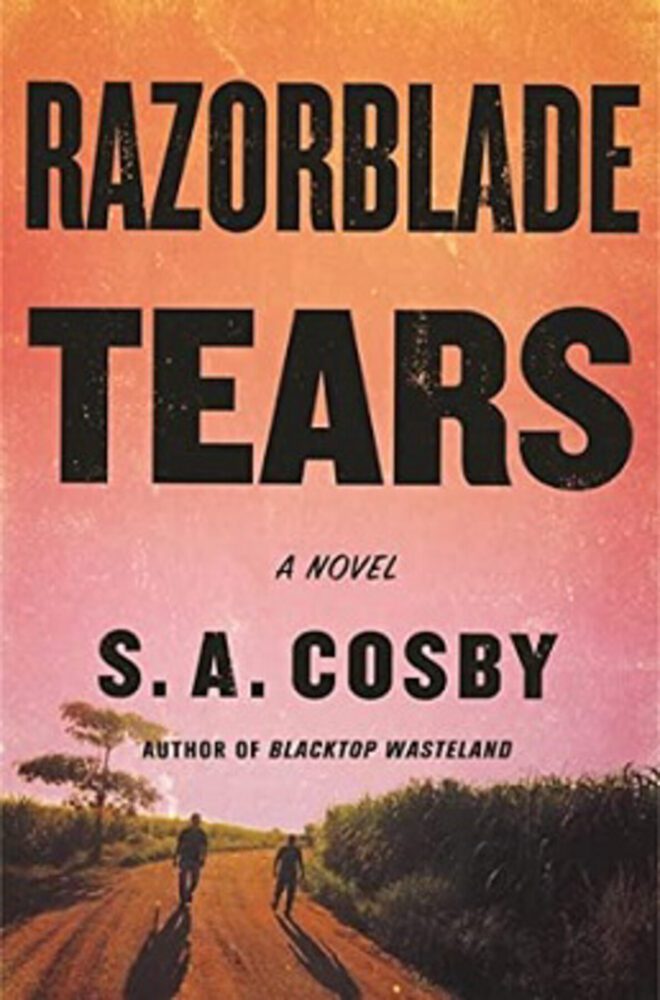
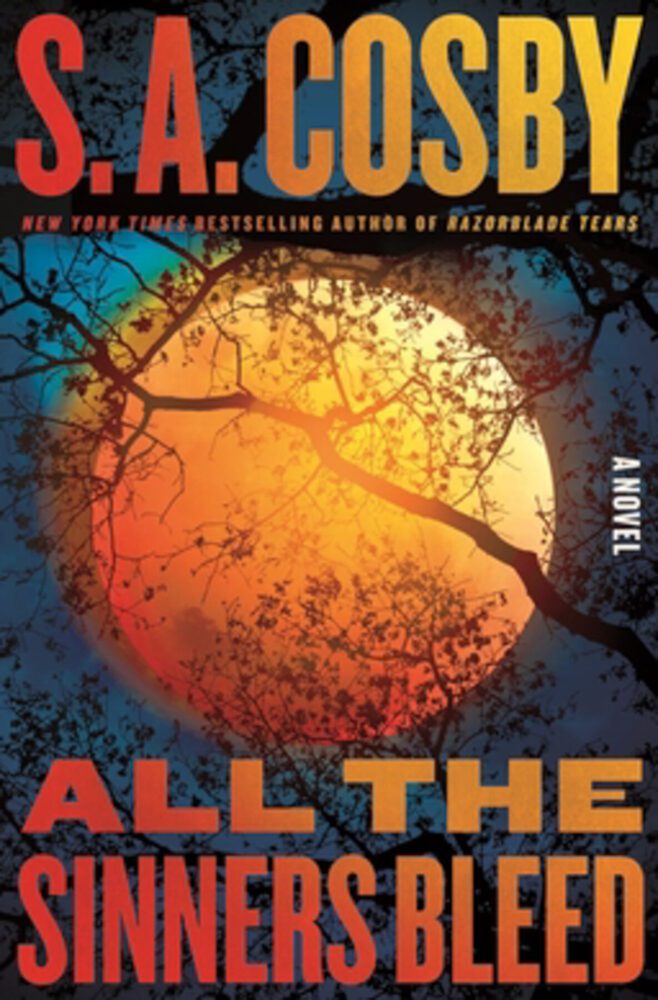
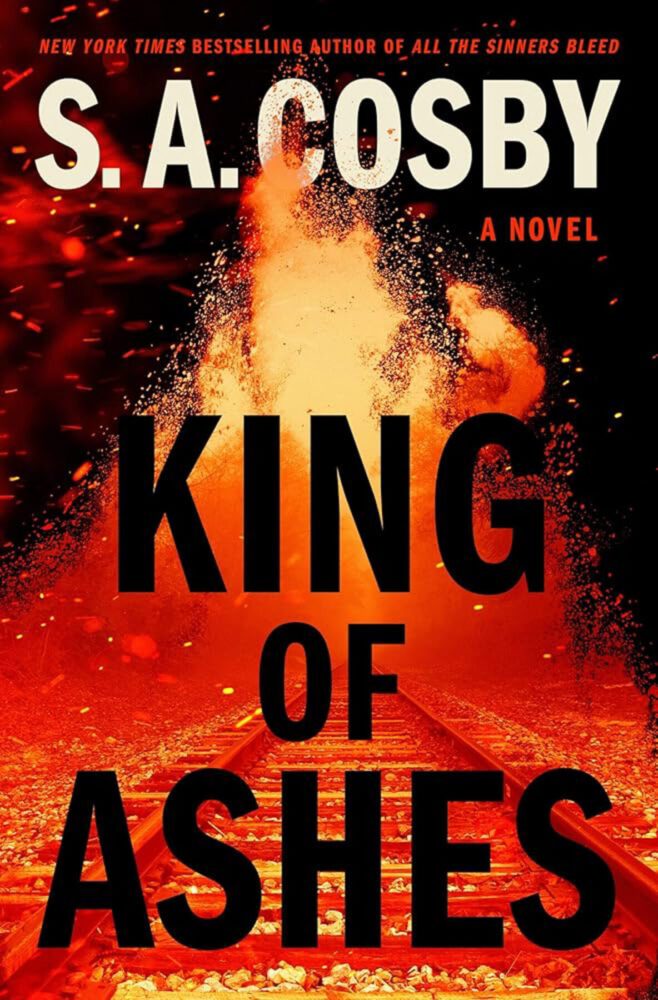
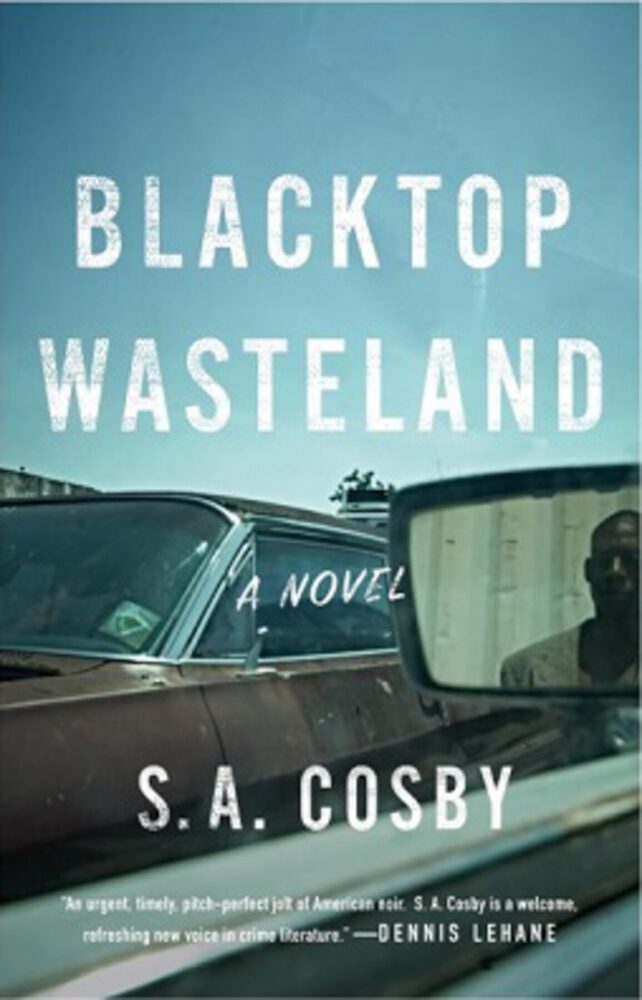
As far as I know, Shawn Cosby doesn’t smoke cigarettes, but that’s okay. He is better known as S.A. Cosby, the author of internationally celebrated, gritty crime novels that have found themselves on The New York Times Best Seller list.
Four of his novels (Blacktop Wasteland, Razorblade Tears, All Sinners Bleed, and his latest, King of Ashes) have landed on former U.S. President Barack Obama’s coveted summer reading list. He’s appeared on The Tonight Show Starring Jimmy Fallon and even co-wrote a children’s book (The Rhythm of Time) with ?uestlove of The Roots.
Cosby is also the recipient of an Anthony Award, an Edgar Award, the Los Angeles Times Book Prize, a New York Times Notable Book distinction, and a suitcase full of other first-place finishes.
And he’s from Matthews, Virginia.
Besides being writers close in age and small-town Virginia boys, the common link is that we were brought up in a blue-collar world we found ourselves routinely pitted against.
Cosby comes from a somewhat similar background as I do. A family of hard workers in a small town. His father was a waterman. His grandfather was a logger. His uncles worked for VDOT. Friends told him to get a job and give up writing, too. Even though his mother encouraged him to write at a young age, people from around the way were hard to impress with writing a bunch of shit down on paper.
Cosby was a manager for a national hardware chain in Gloucester when his first major book, Blacktop Wasteland, came out. I worked various lower-rung kitchen jobs throughout The Fan when I self-published my first collection of poetry.
We met during the pandemic at the 2021 Hardywood Brew Ho-Ho, where we happened to be seated together. He told me, with a gigantic smile, that the night before, the cover of his new book (Razorblade Tears) had appeared on a jumbotron in Times Square.
You would think something like that would give someone a chip on their shoulder. A look what I did, motherfuckers vibe.
But it didn’t.
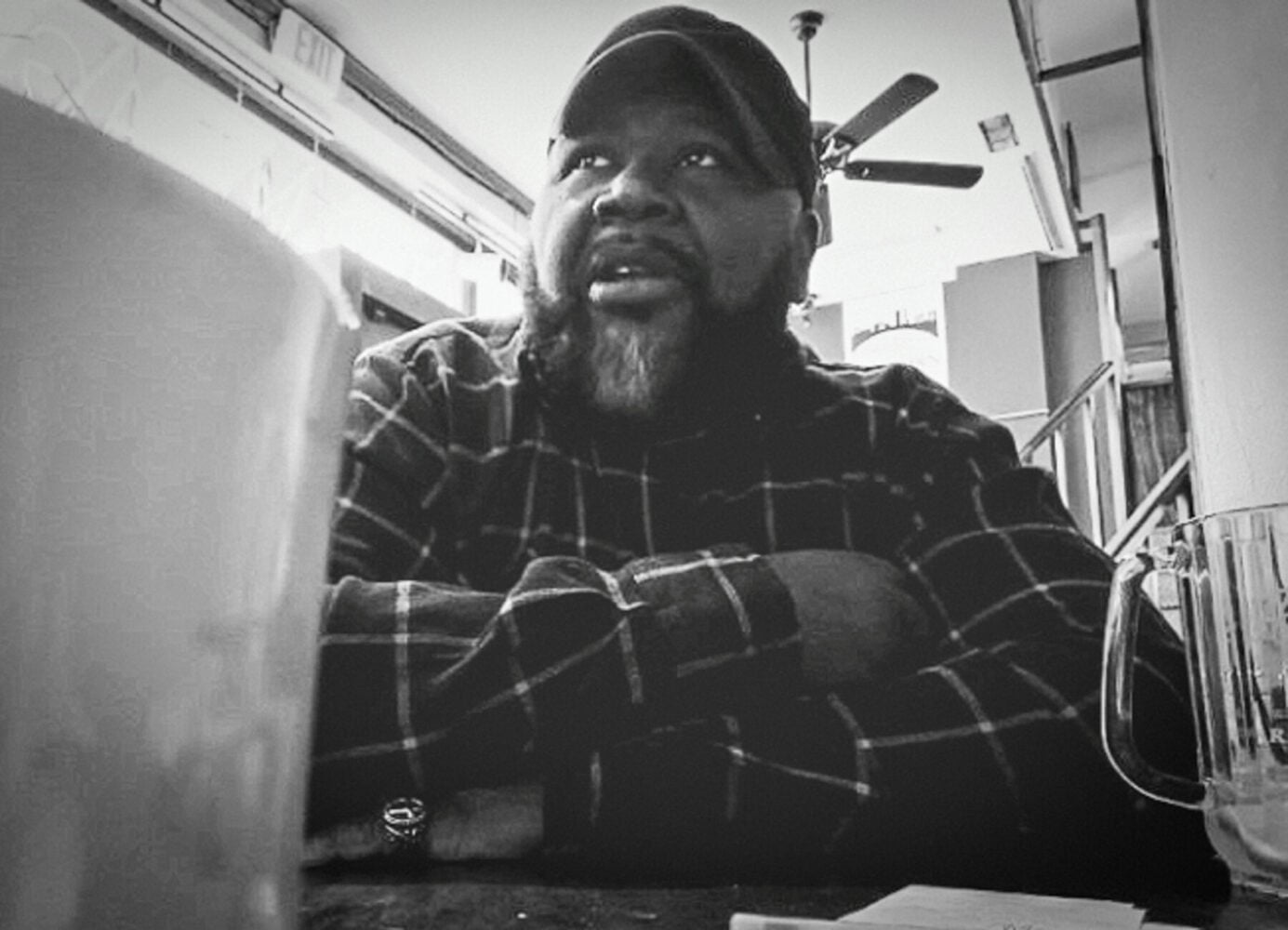
At first impression, Cosby seemed to be the same Southern guy he had always been. Quick with a handshake and a story. A fan of guitar players and rock ’n roll, ball caps, and a good Scotch. Recent national acclaim didn’t seem to have shaken loose his colloquialisms or Bible Belt know-how.
He smiled when he talked. His eyes met yours like you were the only other person in the room, and he listened to what you had to say. I watched him do this with people throughout the length of the Brew Ho-Ho. All of it felt genuine to me.
In the four years since, Cosby hasn’t changed with the growing acclaim.
He is a bona fide storyteller, and he sits at the same table as contemporary greats like John Grisham and Dennis Lehane. His success is a success for all of us country boys trying to find our way to the promised land.
I find pride in it.
One of us had proven the haters wrong. One of us had made it.
Rags-to-riches stories resonate more when it’s someone you can relate to. When their heart is in it for the right reasons. Especially if you share the same passion. You can feel it. That old adage of it takes one to know one works here just fine.
I was finishing a cigarette as I walked down the sidewalk on Harrison Street to the Village Cafe. The original Village Cafe had lived across the street for many years until it hopped the asphalt in the late 1980s to the spot it’s in now.
Grace Street had been the stomping grounds of a young S.A. Cosby back then. There was a time when it had been one for me, just like it had been for half of Richmond.
We figured The Village would be a good place to meet up.
I put the cigarette out on the concrete and opened the front door.
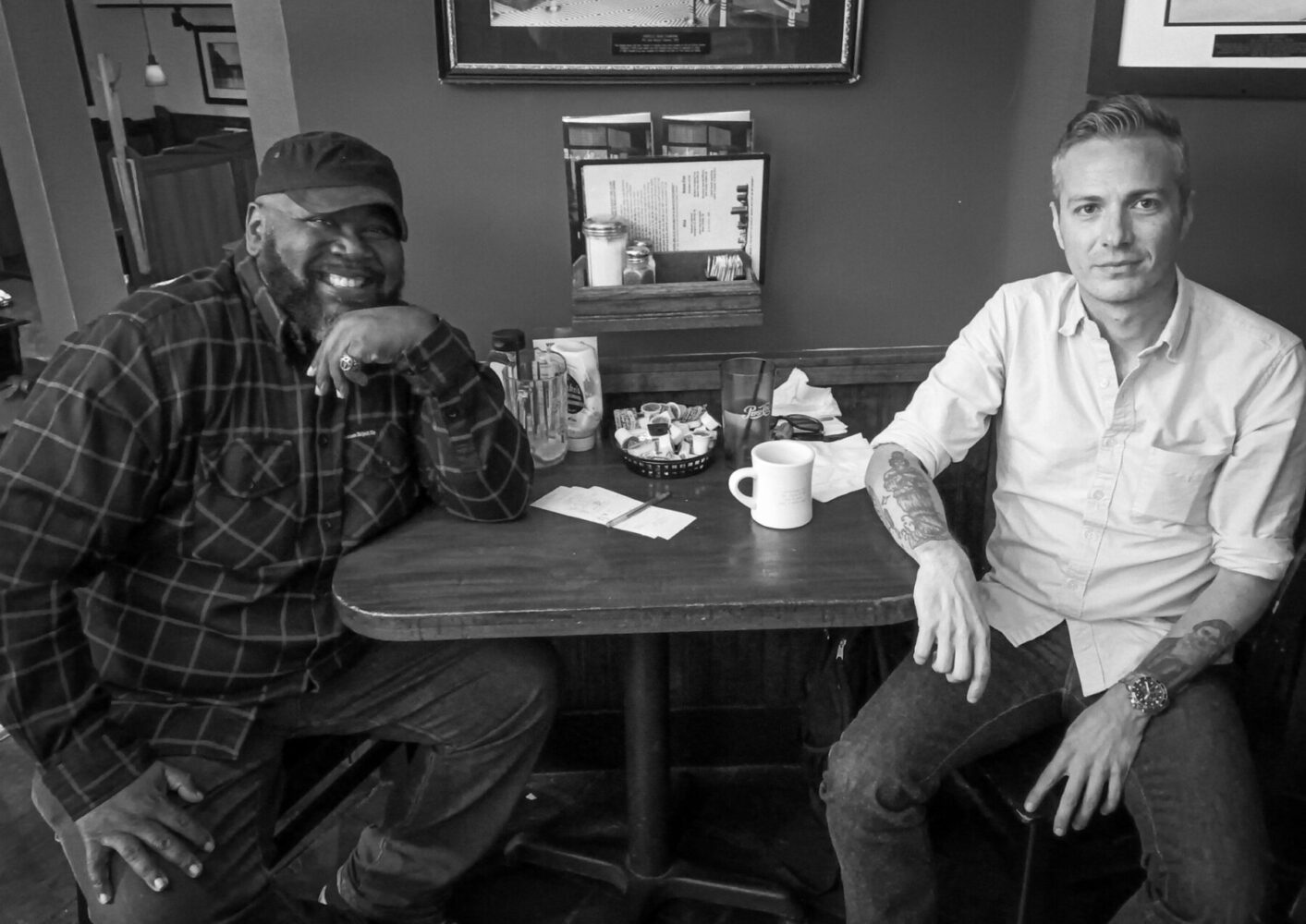
The restaurant was busy, but there wasn’t a wait. We sat at a table in the back near the bathrooms. I drank coffee, and he drank iced tea from a little pitcher. We ate sandwiches and kibbitzed for a while before the conversation moved on to his life as a storyteller.
Even if you already know who S.A. Cosby is, it sounds better when he tells you about himself.
I asked why he chose to write about hard people. Why didn’t he start out writing about accomplished, beautiful people like so many young writers do?
“I think that [type of writing] is more realistic to what people have gone through,” he told me as he took a drink from his straw. “People can understand it. Blacktop Wasteland starts out with a guy at a drag race. He’s street racing illegally, and you’re like, ‘Oh, this is exciting,’ but then you find out he’s trying to make money. He’s behind on his rent for his mechanic shop. He’s going to lose his business. He’s got a thousand dollars in his pocket. That’s all he’s got. He’s trying to double it by doing a street race.
“Or with Razorblade Tears, it starts with a father getting the notice that his son has been murdered. I think for me, it’s a two-part thing. It’s a thematic thing where I want to grab you really quick into the story, but also, it’s a natural thing. These are people I know. These are people I understand. Yeah, I know beautiful people. I know pretty people, but I know some hard people. I know some people that have been through some things and people that have been knocked down seven times and got up eight. I want to show you these people. I want you to understand what kind of story this is going to be about, and I want you to get that these are real people. Their story is worth telling too.”
I told him the stories he writes are far more interesting to me than little Hallmark lives put on the page. There aren’t any comfy slippers in an S.A. Cosby novel. There isn’t a Marshalls a few stoplights down a well-lit street.
From across the table, he told me he wants to write about real people going through real shit, despite his books being written in an exaggerated reality. In his opinion, novels classified as modern literature aren’t plot- or character-driven. They’re situation-driven. He said those stories don’t excite him. They don’t draw him in, even though they have their place in the canon and serve a purpose.
He just thinks they can be boring.
“My grandmother loved Harlequin romances. Beautiful stories about beautiful people, and it was an escape for her from a pretty dreary life,” he said. “But I also saw my uncle reading hardcore crime novels by Mickey Spillane and Raymond Chandler. So, I think there’s room for everybody. Whatever it is that takes you away from a place you don’t want to be, then read that.
“I’m just drawn to the darker, more esoteric aspects of life. And those are the people I want to interrogate. Those are the things I want to discuss. But even in the darkness of my books, there’s hope, there’s optimism. There’s love, there’s laughter. It wouldn’t matter how gritty the book is if the people in the book didn’t care about each other. You can’t have the bitter without the sweet. So that’s the way I look at it.”
“I have always preferred writers that were rough,” I said. I told him I liked writers who wrote about men with blood on their jeans and the women who loved them. I told him I liked Cormac McCarthy. I liked Hemingway. I liked Bukowski.
Because underneath their machismo was hope. Was beauty.
Even if the gritty reality of life was the thing of beauty and hope, it was given to us honestly. You knew how the pain felt without being told how the pain felt. That is what made it beautiful.
Horrible, but beautiful.
“Well, telling the truth. You know, that’s the thing,” said Cosby. “The writer’s duty is to tell the truth. We make up things. I have a tattoo that says, ‘Writers tell lies to find the truth,’ and I firmly believe that.
“I definitely think that we are trying to find the truth of love, of life, of why we’re here. What are we doing? What does it matter? Redemption, intolerance, acceptance, all of those things.
“Somebody asked me one time, ‘Why do you write such dark stuff?’ and I said, ‘I just look at the world.’ You look at racism, homophobia, intolerance, misogyny, class, income inequality, all these things. I don’t think you can write it too dark, because the world is dark. Except in books, when it’s dark, I can have a character make it right. That doesn’t happen in real life, you know?”
For eight years, I didn’t drive. I put on my headphones and walked to where I needed to be. This wasn’t by punishment, but by choice. Over the years, I found money on the ground in various places because I looked at the sidewalk instead of the city around me. There were times when that extra 20 bucks in the gutter saved me.
I told him this.
“The myopicness of optimism is something that I think keeps us from seeing the whole panorama of the world,” he said. “If you just want to look at things, everything’s wonderful. I’m not going to look over here. I’m not going to look over here. I’m not saying that you’ve got to stare into the abyss, but know that it’s there. Know that it’s there to be aware of it.
“And for me, when I write, I’m really trying to show you, like, hey, things can get really bad, but it’s worth fighting for. It’s worth staying here. It’s worth being here to see it out on the other side. I think a lot of people mistake my darkness for nihilism. I’m not a nihilist. To quote my friend Jordan Harper, I’m a ‘disappointed idealist.’”
I told him I loved that.
He took in another mouthful of iced tea from the straw before speaking again.
“We were having a discussion one day, and he told me, ‘You’re an Old Testament writer.’ I said, ‘What do you mean?’ He said, ‘You believe in good and evil, and somebody’s got to stand up for it.’ And I’ll take that. I’ll take that designation, you know?
“Again, in my books, the men, the women, are rough. They’re tough. They’re gritty. But they try to do the right thing. They’re just humans. They’re doing the best they can with what they got, and I think that’s all we can do, you know? Again, I don’t want to come off like I’m shitting on books that are… there’s a time and place for those kinds of books. Those just aren’t the kind of books I want to write.”
“You write the book you want to read,” I said.
“Exactly.”
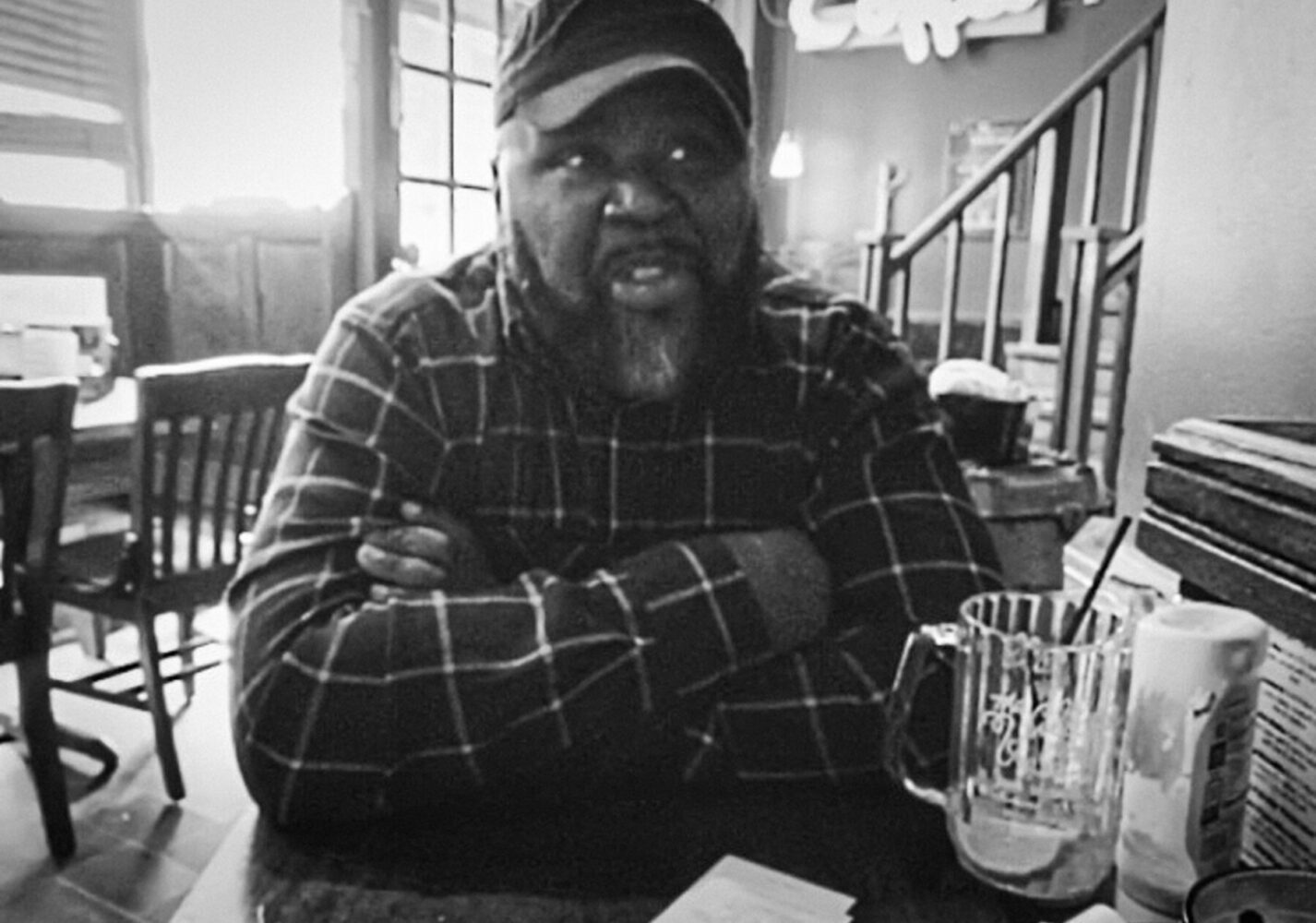
As I sat across from Cosby, I wondered if he knew who Roy Hobbs was, the hero of The Natural (which was first a novel by Bernard Malamud). It is the fictional story of a godlike ballplayer who came from out of the shadows to flip the National League like a card table.
I asked him if he was familiar. Could he see the parallel?
Of course he knew who Roy Hobbs was.
“So, I was at a college,” he said, “and a friend of mine who’s a professor was talking about me to the students, and she said, ‘You know, some people are just born storytellers. They just got it. Whether they write it down or whether they just talk to you over a barbecue grill.’ Some people just know how to tell a story. They understand timing. They understand nuance. They understand suspense. She’s like, ‘This is my friend, but he’s also just a natural-born storyteller.’”
“So, I definitely feel that to an extent. I’ve always wanted to tell stories. Even when I was seven years old, I used to make up stories in my head for myself. I liked going and climbing the magnolia tree and making up stories about people that lived in the tree, like elves and shit. My very first story I wrote because my mom challenged me to write it, because I was being very critical of a story she was reading to me.”
I asked him what story she was reading.
He said it was The Three Little Pigs.
I took a drink of coffee as Cosby quoted Stephen King.
“Writing is a form of telepathy.”
“I think your first responsibility as a storyteller is to tell a good story,” Cosby said. “But there are layers to it. You can look at it as entertainment. You can look at it as an existential exercise. You can look at it as an emotional bond with someone.
“I had a lady who read Razorblade Tears, which is about two homophobic fathers whose gay sons are murdered and who get revenge for it. She came to me in L.A. and talked about how, ‘My son was gay and we didn’t get along and I didn’t accept him, and unfortunately he passed away. So when I read this book, I feel like I’m talking to him.’ I mean, those kinds of experiences, you can’t buy those. There’s nothing like that.”
A server came to the table to refill my coffee and take our empty plates.
“When you become a storyteller,” he continued, “you become a part of this lineage that stretches all the way back to sitting in caves around fires. It’s how humans make sense of the world.
“I had a friend who used to tell me that he thought the world was evil. I put this in a book. He said, ‘I used to think the universe was evil. And now I’ve come around to the idea that it’s indifferent.’ That’s so much more terrifying.”
I blew steam away from the mouth of the coffee mug before taking a sip and wondered if I was grinding my teeth from the caffeine or the sudden urge to have a cigarette. I asked him how we fight indifference.
“I think the way we fight that entropy, the way we fight that indifference, is to write. Is to create art. Is to create beauty,” he said. “I’ve said this in several interviews, but I’ll say this here too. A lot of people that poo-poo writing or are dismissive of the arts, during the lockdown, during the beginning of the pandemic, nobody could go anywhere. Books and movies and poetry and songs saved people’s lives.”
Cosby told me art kept people from losing their minds during the pandemic. That it kept people from “running naked through a sprinkler.” He said art isn’t as appreciated in the U.S. as it is in European countries and other parts of the world. He said if you go to Vietnam or Japan, art is as important as every other aspect of the human condition.
Americans, he said, treat it like it’s a hobby. They don’t see it on the same level as politics or the law or science.
“It’s like music,” he said. “Music is the same thing. A beautifully well-written song speaks to you. I’ve heard songs that have brought me to tears. I’ve heard songs that spoke to me in a moment that I needed it. Jeff Buckley, ‘Lover, You Should Come Over.’ It will bring you to tears. If you’ve been a man who’s broken a woman’s heart, or you’ve been a man who had his heart broken, that song speaks to you. With my books, I hope that my books do that for people.”
“Is it worse to have your work hated or ignored?” I asked him.
“People tell you, ‘Don’t read your reviews.’ I really don’t anymore. I used to. I don’t read them now. But even one-star reviews, I made you feel something. If you hated it, then you felt something. What I hate is the, ‘It’s all right.’”
“Oh yeah, that’s just a polite comment,” I said.
“Either tell me you love it or tell me you hate it. Have a visceral reaction to it, because I put my blood, sweat, and tears in it,” he said. “I think the hardest thing for a writer is when you hear somebody say, ‘Yeah, I didn’t finish this book,’ and it’s like, oh my God. That would just make you want to crawl in the ground and pull the covers up over you.
“But I do think, like you said, indifference is, what is it, Dante’s Divine Comedy. That it’s not to be smitten by God, it’s to be forgotten by God. To be out of the sight of God. That’s what Hell is. So I definitely understand that, and I definitely believe that.”
“It’s the Land of Nod,” I said.
“Exactly,” said Cosby. “For me, writing has saved my life so many times. I grew up in a small mobile home in one of the smallest counties in Virginia. My mother was partially disabled. She and my dad separated when we were like five. Our other trailer burned down. We had to get another one.
“On the surface, we had a hard life, but I never felt unloved. I never felt uncared for. There were always books around, but it was still difficult. Then to see myself on a billboard in New York. To go to France. To sit at a cafe and eat a fucking croissant, and I’m in Paris.”
“And it’s all because of your writing,” I said.
“I did this with my mind, with my words, with the stories that I’m trying to create.”
“And the universe has rewarded you for it.”
“Yes. You’re able to say, ‘I did the work, and now this is my reward.’ And I think everybody deserves that reward,” he said. “Look, I ain’t going to lie and sit here and say that it’s all about the money, but I think I’d be lying if I said it’s not. You want financial security. You want stability. But more important than that, you want to see your work appreciated.
“I take it very seriously when somebody plunks down 28, 30 bucks for one of my books. I want you to enjoy yourself. I want you to have a thought-provoking story. I don’t want anybody to ever read something and think I mailed it in.”
“I’ve heard records when the band does that,” I said as I finished my coffee.
“I give you everything I got,” continued Cosby, “because that’s the only way I know how to do it. For me, art and writing have just been so important in my life. Even before I was getting paid for it, I was a writer. I was a storyteller.
“I said this at a college once. I was talking to an MFA class, and I said, ‘I encourage you all to get your MFA. I hope you get it, but do not think that makes you a storyteller.’ It can teach you the technical aspects of writing. It can teach you narrative philosophy. Man vs. self. Man vs. man. Man vs. nature. It can teach you the hero’s journey and all these different motifs.
“But it can’t teach you how to tell a story. You either got that or you don’t.”
“Joe Satriani and Yngwie Malmsteen are virtuosos, but how many of their songs do you remember?” he said.
“I got into an argument with a guy online about it. I made a joke. I said, ‘The best thing that ever happened to Eric Clapton was Duane Allman died.’ I can acknowledge Clapton’s technical prowess. I can acknowledge the fact that he understands how to play the guitar. But for me, I don’t feel the soul that I feel in Duane Allman.
“When I listen to ‘Whippin’ Post’ and I hear that first solo. When you listen to ‘Layla,’ the riff on ‘Layla’ that everybody knows is Duane Allman.”
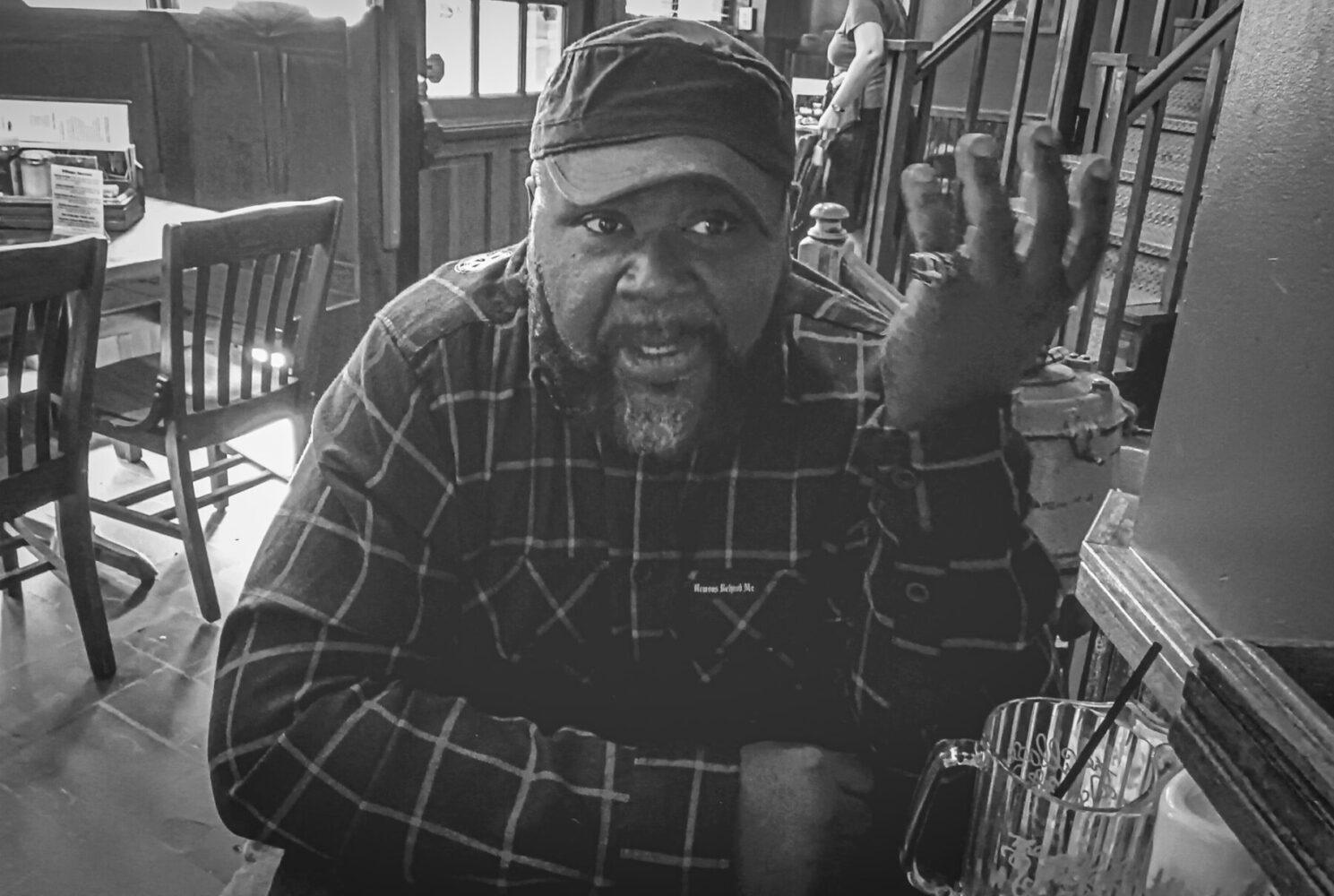
Cosby waved down the server and asked for the check. While we waited, I asked him why he decided to write about Virginia instead of somewhere else.
“I want to tell the stories of the people I grew up with. The people I know,” he said. “I always talk about Virginia when I travel. I talk about being from Virginia, and not just being from Matthews, but experiencing Richmond. Experiencing the western part of the state. Experiencing Northern Virginia. Experiencing the Appalachian part of Virginia.”
“For me, Virginia is such a complex, interesting place. I remember as a kid growing up, coming out of the counties, coming up to Richmond in the 1990s. Richmond was dangerous as hell in the ’90s. You could catch death like a cold up here. I remember being with my friend, and he had this old beat-up van. We would park at The Village around the corner, walk over to where we are sitting, and hang out at these rows of tables. There’d be all these goth kids, all these punk kids. There’d be women from the Richmond Ballet hanging out. There was this sort of sense that anything could happen. Anything. Good or bad.”
“There were so many different types of people,” I said.
“Exactly. When I write about Virginia, when I include Richmond, I try to get that feeling that it’s not the same city it was in the 1990s, but there’s still this vibrant, interesting, really unique sort of identity that it has as a city,” said Cosby.
“The music scene. The LGBTQ friendliness. The inclusiveness that Richmond has now. I never thought as a kid that I would see those monuments taken off Monument Avenue, and Richmond did it.”
“It’s an honor to write about Richmond. About Matthews. About Arlington. About Prince George. Even these places where maybe it’s a little rough around the edges, because I don’t know how many people are telling those stories. I don’t know how many people are telling the story of Virginia. Whenever you see Virginia in media, it’s not Virginia. It’s Vancouver. And it’s always Quantico, and it’s always Langley. Nothing wrong with that, but there’s so much more to the state. There are so many more stories to tell.”
“I think it is important to articulate those. To tell those stories in a way that is respectful and honoring those people, but also truthful. Don’t shy away from the grotesqueness. The grotesqueness and the beauty have to live side by side. They’re in the same church, in different pews.”
I sit in the basement tonight with 11 cigarettes left in a pack. It’s been four months since I sat at the Village with S.A. Cosby and talked about writing for an hour. I don’t know why it has taken me this long to write this article, but it has.
Maybe it’s because I knew he would read it.
I look up at the little smoke rings that rise toward the floorboards above me each time I bump my arm on the chair. I wonder if this will be the night I write the article’s closing. If what I have to say right here will be something worth leaving on the page for people to read. If what I have to say right here doesn’t sound like a bunch of hooey.
I guess you never really can tell unless you write it down and give it a once or twice over.
Maybe that’s the true lesson in all of this. It really doesn’t matter where you come from or who you are. You just have to do it. Whatever it is. Whatever it takes.
That’s the only way any of us have a chance to get out of here. That’s the only way any of us can survive.
We live our lives to tell our stories. To leave our footprint. So we aren’t forgotten after we go. So none of this truly disappears.
This is how we live and this is how we die.
We inhale and we exhale, and we rise with the smoke.
Main photo of S.A. Cosby by Ryan Kent
Support RVA Magazine. Support Independent Media in Richmond.
At a time when media ownership is increasingly concentrated among corporations and the wealthy, RVA Magazine has remained one of Richmond’s few independent voices. Since 2005, the magazine has provided grassroots coverage of the city’s artists, musicians, and communities, documenting the culture that defines Richmond beyond the headlines.
But we can’t do this without you. A small donation, even as little as $2, one-time or recurring, helps us continue to produce honest, local coverage free from outside interference. Every dollar makes a difference. Your support keeps us going and keeps RVA’s creative spirit alive. Thank you for standing with independent media. DONATE HERE.
We’ve got merch HERE
Subscribe to the Substack HERE
And Reddit HERE
And YouTube HERE