
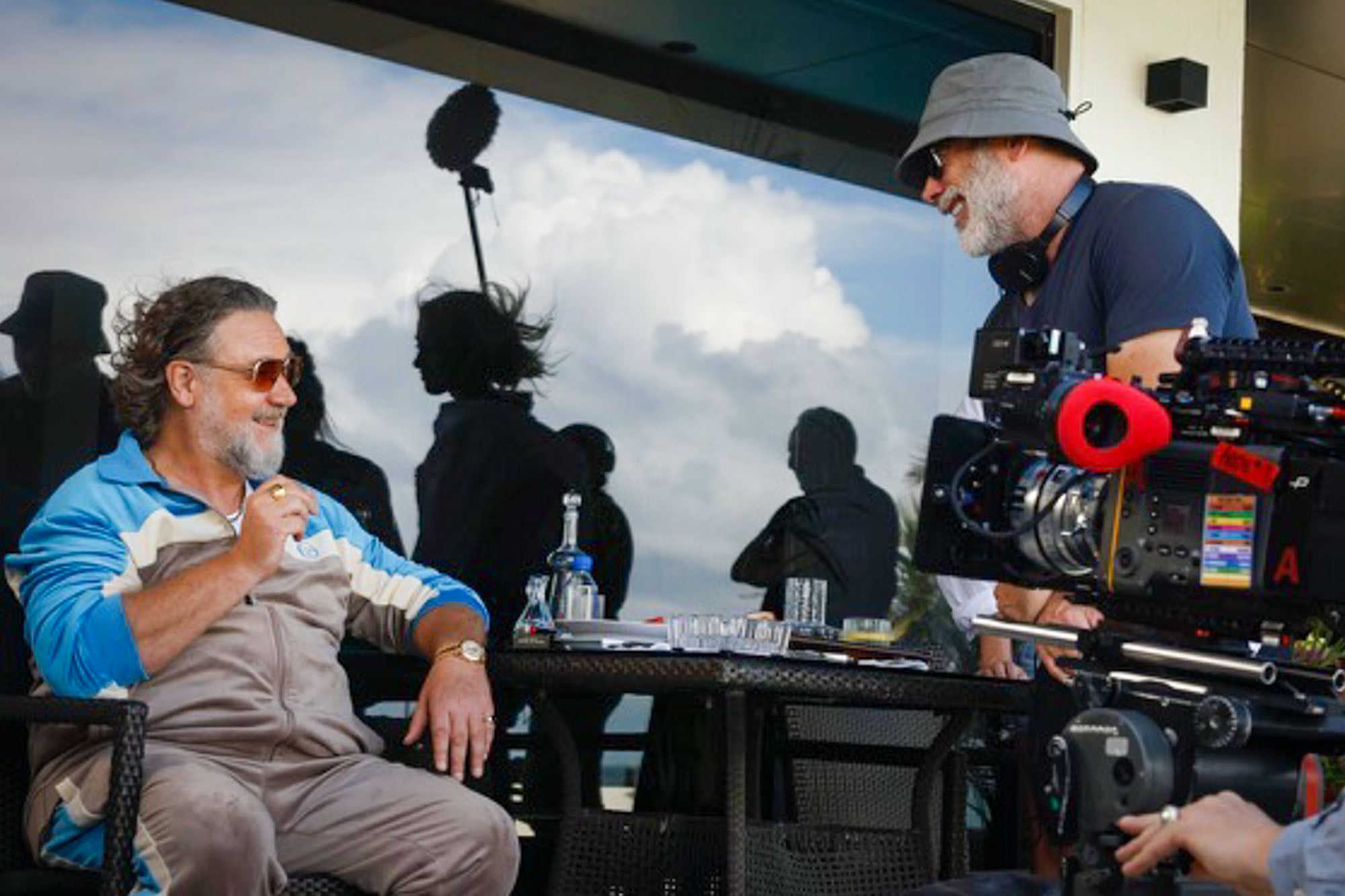
“That’s the biggest thing. You have to deal with rejection every day and not lose enthusiasm. You have to stop thinking about the rejection.”
Derrick Borte might be a Hollywood director, but he’s still a Virginia local. That connection becomes obvious the moment you meet him.
There’s an understated poise to Borte. The kind of low-key cool you’d find randomly striking up a conversation in a bar about the legacy of The Clash without realizing he also just directed the new Russell Crowe film The Get Out. Or that his resume includes titles like The Joneses, Unhinged, London Town, and American Dreamer—an indie shot guerrilla, where he famously blew up a car at Norfolk’s Harbor Park without clearing it with the city first. In the creative wars, sometimes it’s better to ask for forgiveness than permission.
That kind of ease is hard won, and even harder fought. Especially in our attention starved economy where there’s an expectation of immediate recognition, even for the most benign acts of creation. But what sets Borte apart isn’t just his filmography, which certainly entitles him to an ownership stake in Virginia’s creative dividend, but his perspective on human agency.
Behind the cinéma fantastique is a formative understanding of the friction between individual choice and the systems people spend their lives creating for themselves. When those forces collide is where Borte finds his stories: a liminal space between opposing realities that feels all at once unnervingly familiar and strangely abstract, whether we’re willing to admit it or not.
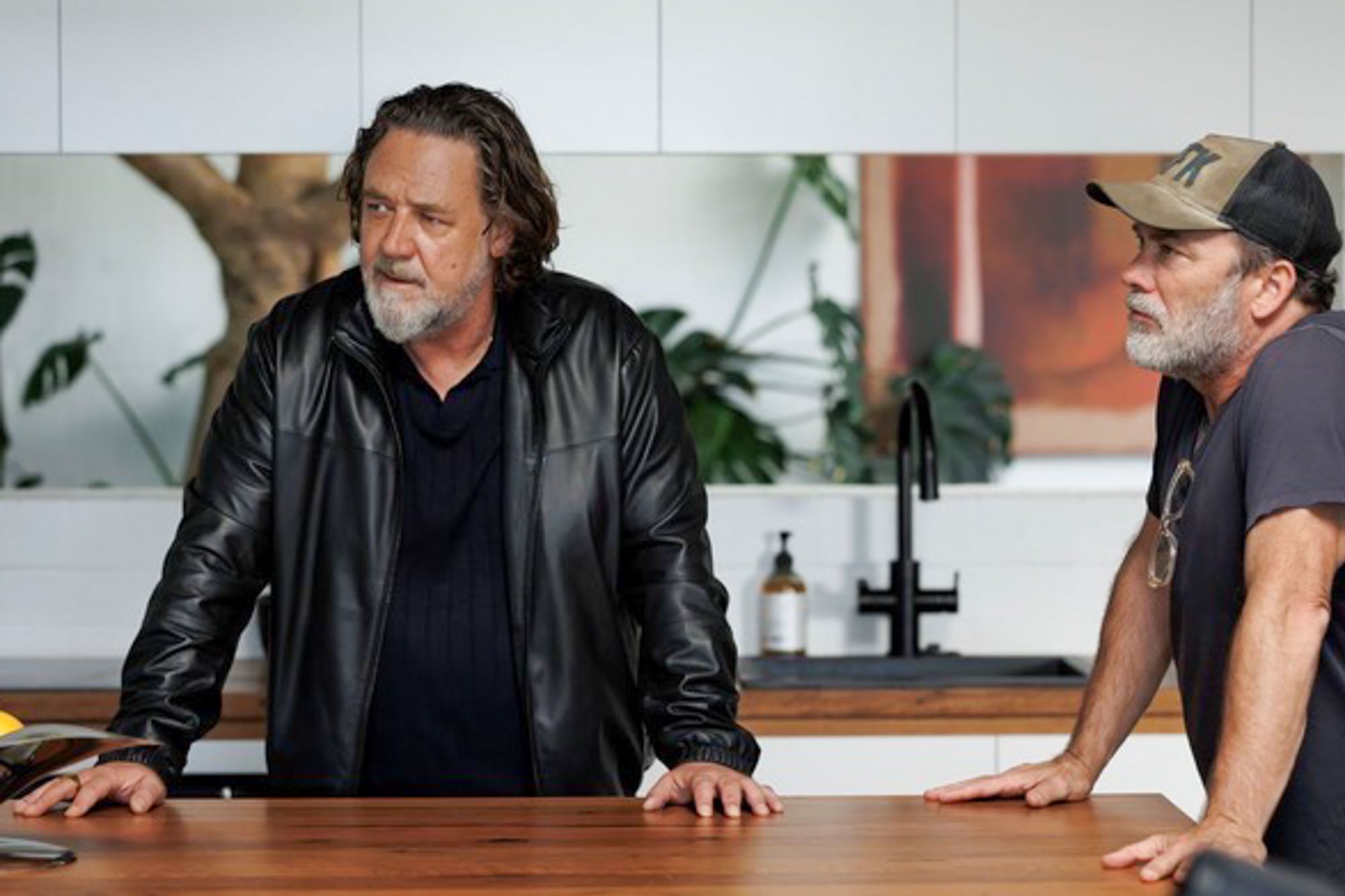
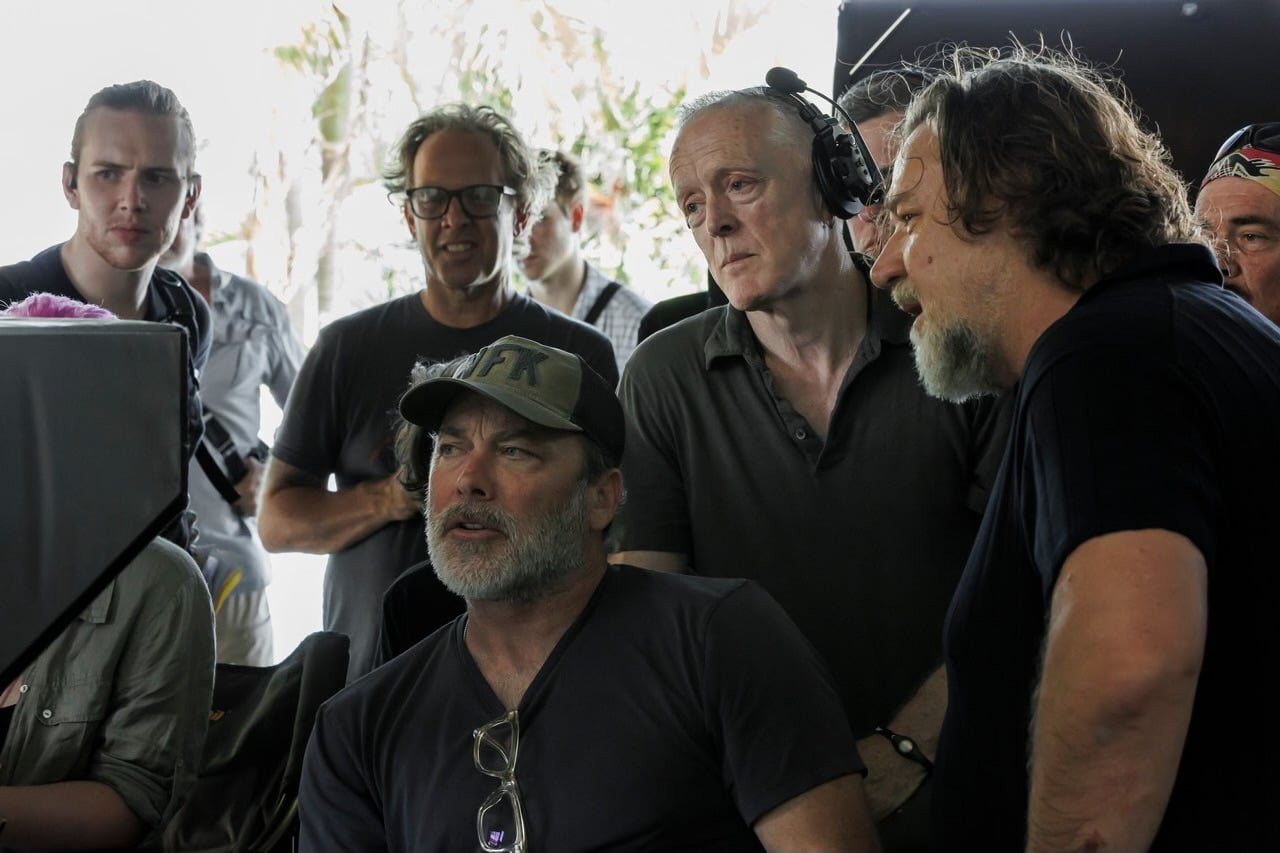
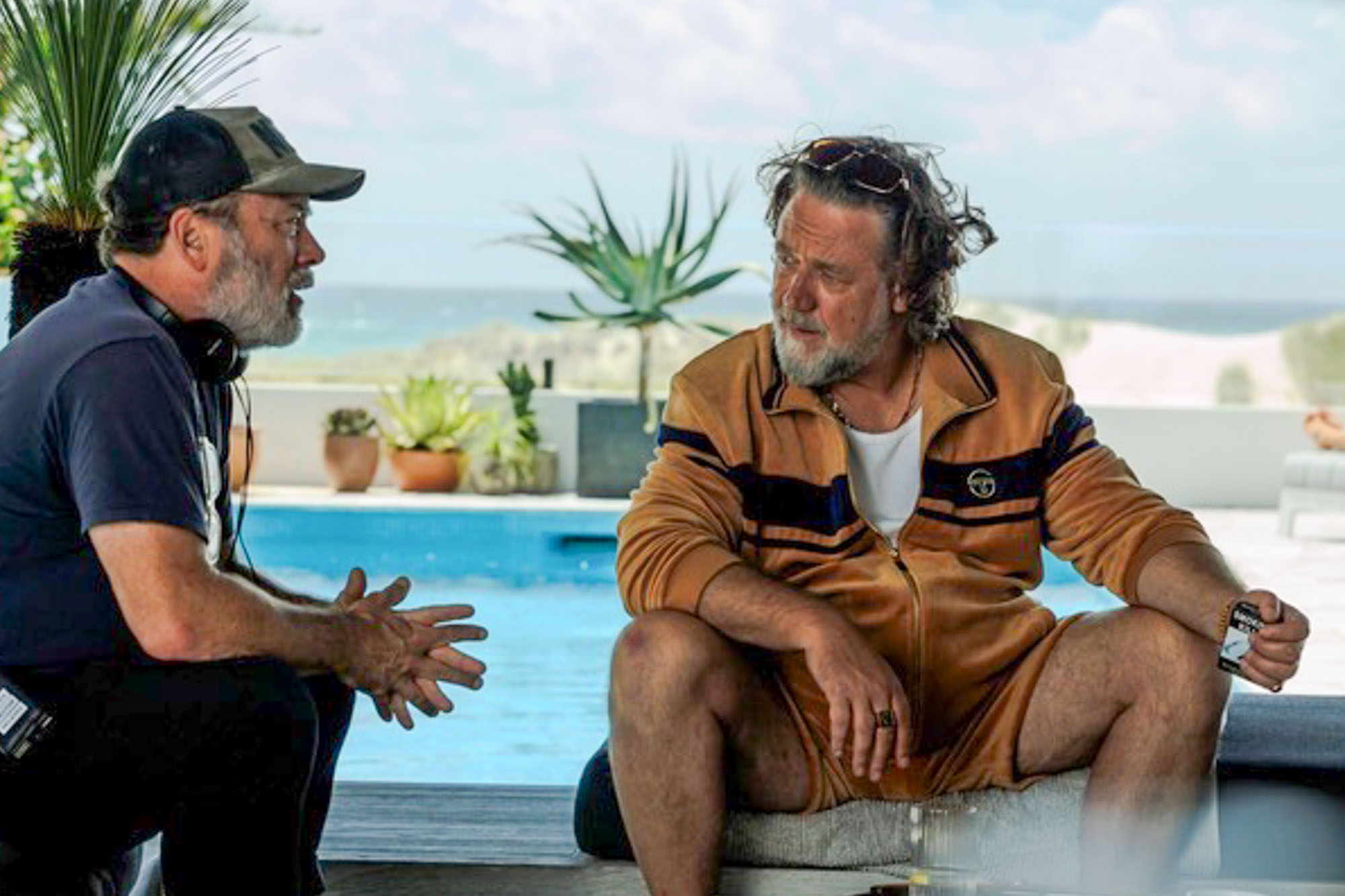
Those concepts are on full display in his latest film the neon-noir crime thriller, The Get Out, starring Russell Crowe, Luke Evans, Teresa Palmer, and Aaron Paul. Ahead of the film’s release, we caught up with Borte to talk about his philosophy on filmmaking, telling stories from liminal spaces, and building a career in Hollywood on his own terms. But also about why—after all he’s achieved—he keeps returning to Virginia.
Derrick, great to finally meet you. Should we hop right in and talk shop? Because I love your films.
Yeah, man, let’s do it
Your new film, The Get Out, premieres tomorrow [June 26]. It stars Russell Crowe. It’s a neon-noir crime thriller about a man trying to leave one life behind for another. Of all the stories to tell right now, why tell this one?
Wow, you’re getting right into the serious stuff.
Russell and I had been looking for a project ever since Unhinged wrapped a few years ago. We’d been trading a few things back and forth, and then this one came along. We both just really connected to the material.
So I got together with my writing partner, Danny Forte, and we adapted the book [Strip]. It’s about reinvention for the character Russell plays — Manko Kapak. He’s a guy that came from Albania and has a club in Los Angeles. He’s doing some other things including washing money for the cartel, which is also how we got set up in the first place.
At the same time, he’s got this picture-perfect American dream that he’s been building for a long time, but it’s starting to slip out of his grasp as time beings to pass him by. That really spoke to both of us, and it felt like the right project to jump into.
You just talked about time. Looking at your arc as a filmmaker, are you weaving your own narrative into this film and how you understand the passage of time?
As a filmmaker, so much of what you do is determined by permission. It’s determined by the opportunities you have. You may have a great project—and another great project— that you think could weave together a trajectory you’d like to be on, but you’re at the mercy of the opportunities that are available.
I’m always open to projects, but at the same time I try to pick things that are challenging. Does it look like something that I can justify spending a year of my life working on?
There are certain things within these films that resonate with me and create a through-line. I tend to gravitate toward that gray area between the good guys and the bad guys — people who make bad decisions, find themselves in difficult situations, and then continue to make more bad decisions to try and save themselves.
This film definitely speaks to that.
You’re talking about the liminal spaces in life, where people can get trapped?
Absolutely. It’s much more interesting than the very black-and-white idea of good guys and bad guys.
Well, there’s nothing really binary in life anymore. That’s the grey zone we all live in. But I don’t want to digress. You brought up wanting to collaborate with Russell Crowe again. What did you learn about him as an actor that made you want to build another film around him?
First off, he’s amazing on camera. That’s the number one thing. You put him in front of the camera and he’s magnetic. He’s so talented and nuanced in his performances, and that makes my life and job a lot easier when you point the camera at him and some of the other people I’ve had the good fortune to work with.
Also, just as a person, he’s very intelligent, very generous, and incredibly funny.
That’s really where this one came from. When we were making Unhinged, which is obviously not a comedy—after intense scenes he would say something that could lighten everyone’s mood very quickly. He’d make everyone laugh, and I just thought, I want to find something funny to do with him.
He doesn’t really get to exercise that part of himself on camera very often.
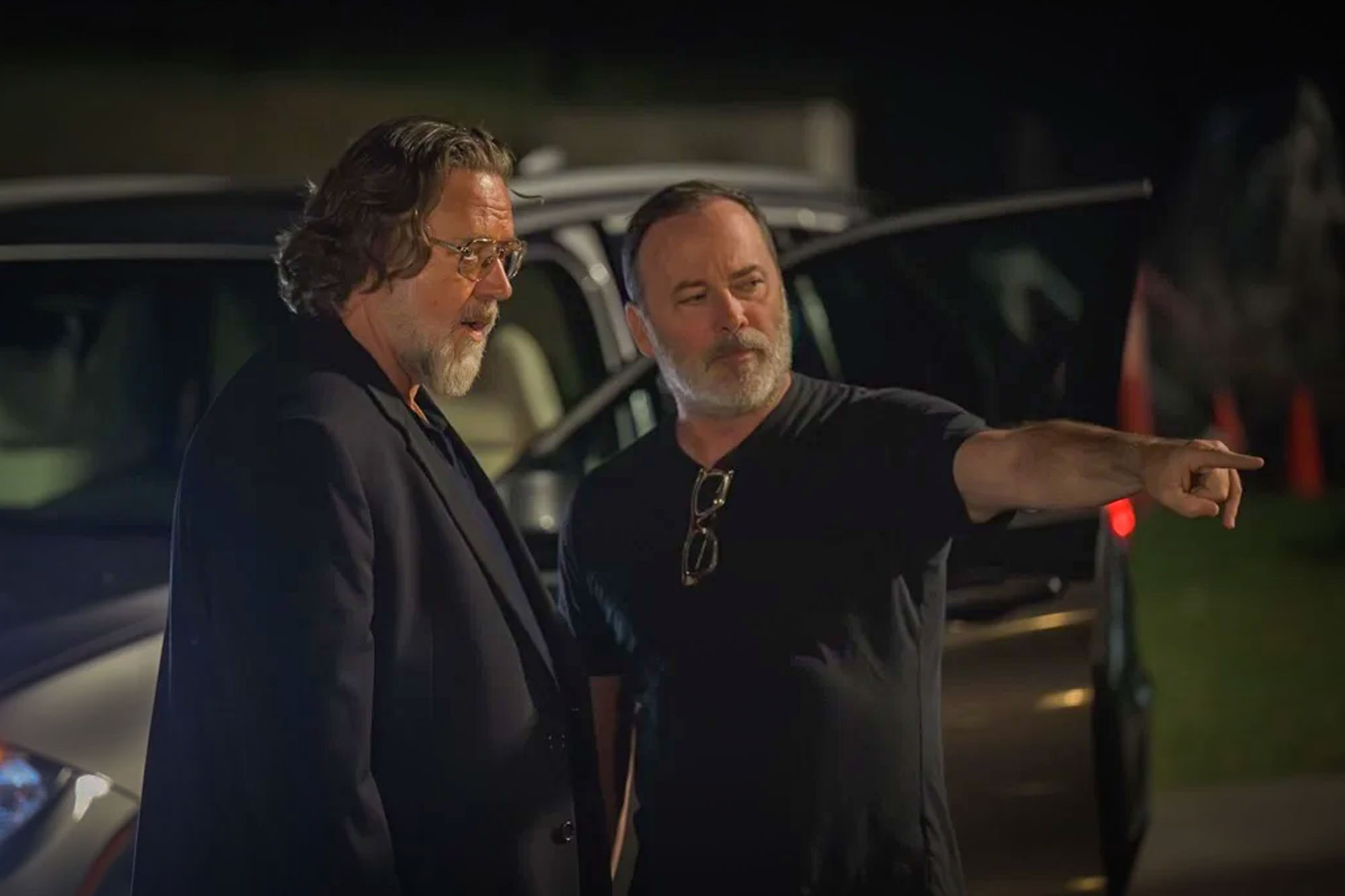
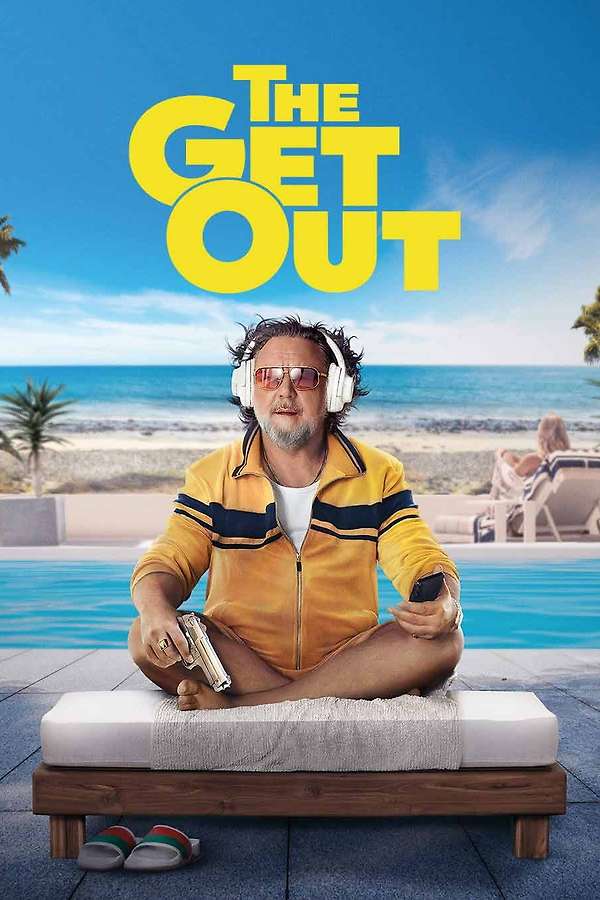
When I read the production notes, it seems like you’re drawn to certain kinds of characters—plural. You’re not focused on single character motivations. What was it about this particular set of characters that you found so interesting, and how did you translate them from the book to the film?
I’ll probably answer your question backwards.
First off, as it relates to adapting the book, Manco [Russell Crowe] is pretty true to who he was in the novel—except now he’s Albanian instead of Hungarian.
The essence of who he is, is very true to the source material. I think it’s with the other characters that we took some liberties, because I wanted them to have more of their own voices and more of their own unique personalities. I wanted each of them to feel like themselves, like they were the main character in their own story.
When you have a group of actors like this, I wanted to give them more than I found in the book. I also wanted the stories to connect a little bit more, so I took some liberties there.
Can I ask a tangential question? I spent most of my life overseas. Why make him Albanian instead of Hungarian?
That was Russell’s idea. He was talking about this Albanian friend and everything he did to escape Albania and make his way through Europe to Los Angeles. That became an inspiration for Russell and for the character.
Albanians have a reputation. When push comes to shove, you want them on your side.
I can second that. I worked with some Albanians in Angola.
Manco’s a sweet, generous guy. But he’s also seen his share of trouble and knows how to handle himself. That’s important for his character.
Your characters often seem trapped in systems they’ve created for themselves. Manco in The Get Out. The Joneses. Or even Shane in London Town—he’s trapped in a working-class system that’s failing in the UK. Is that a conscious theme you’re exploring: how we become trapped in our own creations?
I definitely gravitate toward those kinds of stories. I don’t know whether it’s the eighth-grade punk in me that wants to tell stories about the man against the system—or the person against the man, or however you want to say it.
But I do gravitate towards rebellious stories about people trying to break free of things.
You talked about being inspired by certain films while making The Get Out and you mentioned To Live and Die in L.A. I also spotted what looked like a not-so-veiled reference to the original Point Break in the trailer. As a director, how do you capture that intersection of nostalgia and homage while still maintaining your own sense of originality?
That’s a great question.
Inevitably, we’re all influenced by everything we’ve seen before. For this project, I definitely looked at a bunch of L.A. films, including the ones you mentioned—To Live and Die in L.A., Collateral, and others.
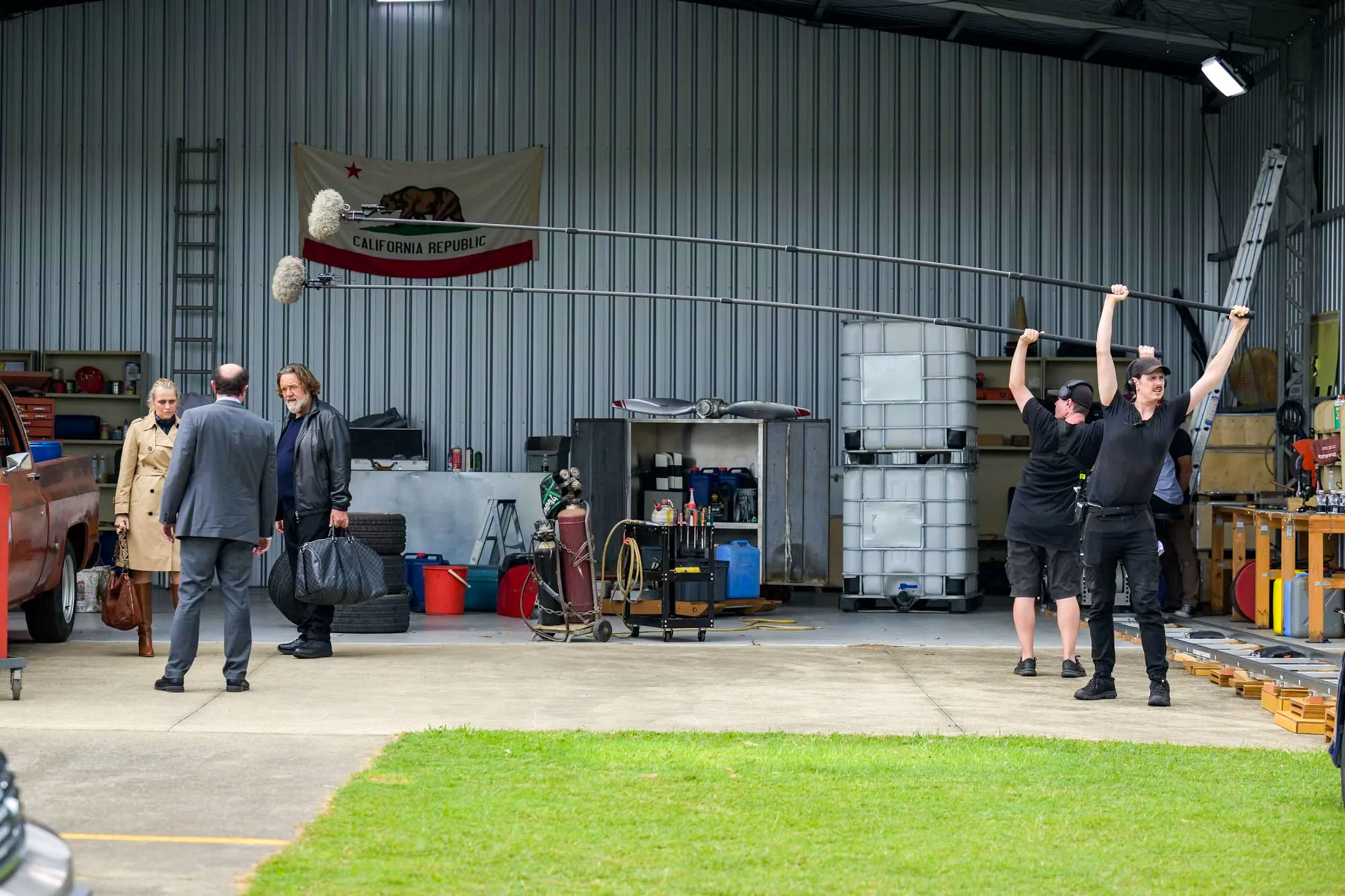
We were shooting on the Gold Coast of Australia, standing in for Los Angeles, so it was part of the drill. We looked at those L.A. films and tried to figure out how we could make Australia look like Los Angeles in whatever way possible. That’s why we ended up putting the nightclub in Koreatown because we found some places on the Gold Coast that looked just like Koreatown.
When we did our first test screening in L.A., not one person said anything about it not being Los Angeles. My production designer, Freddy Waff, is really amazing at what he does. The most challenging part was driving on the wrong side of the road—although they probably say we drive on the wrong side of the road. We had a couple of pickup days with our second unit driving in L.A. because there just wasn’t any way around it.
You spent years moving between indie films and larger studio projects. Those are radically different production environments. How do you protect the things that make Derrick Borte films actually feel like Derrick Borte films?
I’ve never actually been asked that before.
You know, a viewpoint is a viewpoint, regardless of budget. I did this small film for a few hundred thousand dollars. It’s still my favorite experience and probably my favorite film—American Dreamer with Jim Gaffigan. A very small, very dark film. We shot it in 16 days in Norfolk.
When I was taking meetings about bigger films after that, one of the questions I’d get was: you made this film with no money on such a short schedule? But there’s actually a lot more responsibility—and a lot more difficulty—than making a bigger film with a budget a hundred times larger. The bigger film is easier because I have all the resources, all the equipment. I have the time I want.
I’m happy to work either way, but it depends on what the project calls for. I’m happy with guerrilla filmmaking—to roll up my sleeves, put a camera on my shoulder, design my own stunt sequences and special effects. It’s like being a kid in a candy store.
We actually blew up a car at Harbor Park [in Norfolk] and then called the fire department to come put it out. The firefighter was just like, “Movie, huh?” We asked for forgiveness rather than permission.
You can’t really do that on a bigger production.
There’s a quote in your bio that says, “Derrick Borte has made films that predicted the influencer economy before Instagram existed.” I wanted to talk about this because you started your career by holding a viewer’s attention for 90 minutes. Now you’re competing for attention against 90-second reels on Instagram. How does that shape your perspective as a filmmaker?
I don’t think it changes a lot of what I set out to do. It’s hard to hold a reveal in a movie anymore. You have to lay down your cards early and figure it out from there. I don’t know that a reveal like The Sixth Sense or The Usual Suspects would work these days.
Look, people’s attention span is definitely an issue—it’s weird. I was guest lecturing at a film school, and in talking with students, I came to the realization that not all of them even watch movies—and they’re in film school!
So, I don’t know where it’s going. I just want to make movies that I want to watch. We do test things. We put them in front of an audience. If the overwhelming majority of them have a note, then I’d listen to it.
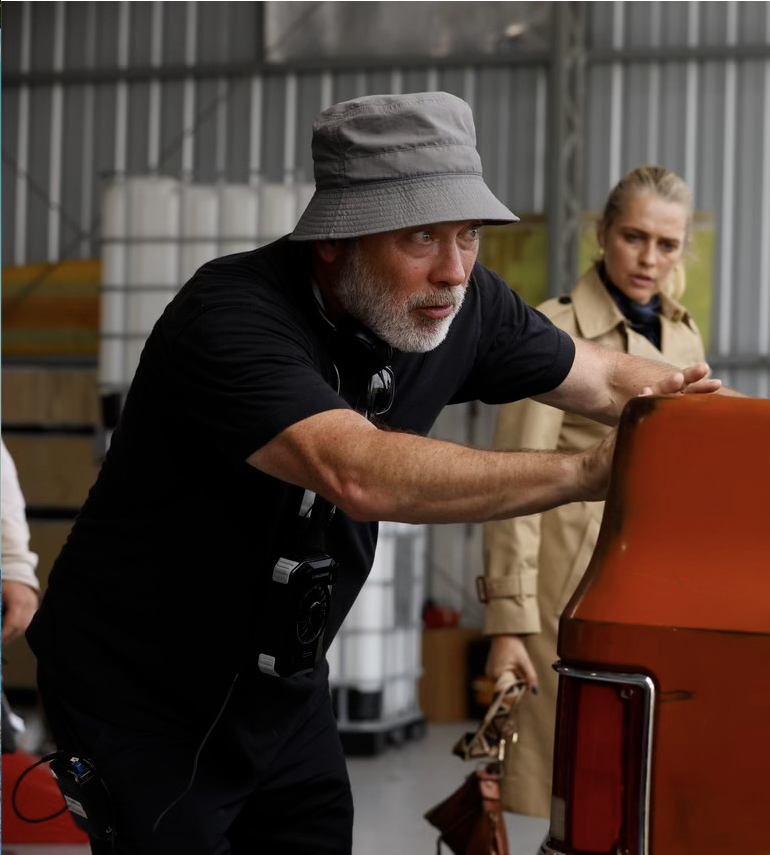
Do you think art and cinema can survive this era of America? The politics and technology. The hyper-commodification of everything.
There’s definitely hope. I think with these films [Obsession and Backrooms] doing so well at the box office this summer, they’re drawing in younger audiences. I dropped my son and his friends off yesterday to see Obsession—they’re 15. That movie’s still bringing people in. So I think there’s hope for cinema.
I’m sure there’ll be things that work and some that won’t. But I do think there’s always hope. I was having a conversation while on a press tour for the film [The Get Out] and a lot of the films that I grew up on in the 1990s and 2000s would never get made right now. They would be limited or they’d be turned into a series.
What could easily be told in a tight 90 or 100 minutes, they stretch to six episodes now. And yet people’s attention spans seem to work for that, even with all of the fluff and padding that doesn’t really need to be there to tell the story. Maybe, in some ways, people’s attention spans are not affected or are still functioning the way they should.
Can I ask you a question about being from Virginia? We’re not exactly known for being a cultural flashpoint, and you’re accomplished enough to live anywhere—why keep coming back to the Commonwealth?
You know, I’ve always wanted to leave Virginia Beach. I’ve always left and I always come back. My wife and I wanted to be here, wanted our kids to grow up here. And, you know, my parents live next door. I think early on I realized that there was no production happening in L.A. anymore—even 15 years ago.
I haven’t shot a single film in Los Angeles. I would fly out for meetings, but then shoot in Georgia, London, or Australia. So I never really had to live there; I only had to go there. One of the good things to come out of COVID was everyone becoming comfortable with Zoom. So I don’t have to hop on a plane at a moment’s notice anymore for one meeting. I have the beach 700 feet that way and a giant state park a few hundred feet the other way. There are a lot of good things here. It’s a great place to be.
You’re from Hampton Roads originally. You went to ODU. You didn’t exactly follow a traditional path into filmmaking by going to NYU or Berkeley. How did you come from Virginia and ultimately break into the business?
It’s a good question. I think I knew there were plenty of people who were more talented than I was out there. And I just decided that I was going to have to work harder than everybody else. It’s a trade; there are lots of trade-offs to that. I’m happy that I have done the things I have, but I’ve also missed out on a lot of stuff—kids’ performances, sporting events, birthdays… you name it.
I’m obviously not looking for any kind of sympathy. I made the choices I did, and I stand behind them. That’s the biggest thing. But you have to deal with rejection every day and not lose enthusiasm—you have to stop thinking about the rejection.
It was very difficult for me in the beginning when I’d send scripts out and would either get no response or get a pass. I just thought they didn’t get me. Like, who are these people? They just don’t understand.
And it wasn’t until I finally realized, no, that’s not it. I just need to do something that’s better, that’s undeniable. Once you do something that’s good enough, good things are going to happen. And somehow that’s what happened.
I want to ask about your film London Town, which I watched last night. It’s a coming-of-age story set in London and the main character’s life is changed when he hears The Clash. I’m curious about your connection to punk music. Because RVA Magazine started as a punk zine.
When The Joneses came out, I turned down everything that came my way. I was just waiting for a perfect project, not realizing they never come to you when they’re perfect—they go to other directors higher-up on the list. So I turned down a few, and my agent was a little frustrated and finally said, “What do you want? What’s your dream project?”
And I said, “I want to find a film about a kid discovering The Clash.” He’s like, “Why?” I said, “because they’re not really a biopic kind of band”—there’s no Sid and Nancy kind of story that would be interesting on that level. But the effect they had on people is where their power lies.
That’s a pretty niche. Looking for that particular of a story.
Long story short, the movie is set around the time they [The Clash] were just breaking out. It was a dream project to go to London, re-record all those songs, and have the remaining members of the band and Joe’s widow bless the movie—it was a big deal.
When the movie came out in the States, there was definitely a group that wasn’t happy, saying that’s not how Joe Strummer actually was. I think we have this romantic notion that Joe was probably way more punk than he really was.
He wasn’t from the streets. He came from a well-to-do family. His dad was a diplomat. But when it came out in London, all these people who actually knew him really embraced the film and said, “This is how he was.” If you were in his circle, he was really generous. He would give you all the money he had in his pocket.
You know, I got asked a bunch about people’s reaction to the film here, who thought it wasn’t punk enough. And my reaction was like, “Hey, I’m glad that everybody’s passionate about my favorite band.” And when they make their film, I’ll be the first one to buy a ticket. But this is mine.
Nothing will ever be punk enough for punks.
I just think people romanticize things in a way that’s not necessarily accurate.
I always sign off with this question. What’re you into right now—films, books, art? Where are you at culturally, and what can you leave our readers with?
I’m reading a lot of scripts, so I tend to gravitate toward nonfiction. A friend of mine, Bill Perkins, wrote this book, Die With Zero—it’s really good. I’m almost finished with it. I also just watched the Jeff Buckley documentary [It’s Never Over], which was amazing.
I watched it too, it was amazing.
It brought me back to a time when I was in New York working at Sony Studios, and I got to know Jeff. I saw his first show with the band that Columbia put together for him. It brought back a lot of memories. He wasn’t that talkative, but I snuck him into MTV Unplugged with Lenny Kravitz once—he came through a back door [laughing].
In terms of music, I always gravitate toward Spoon whenever they put something out. LCD Soundsystem is in there, but as far as new stuff goes—I like the Glass Beams, although I don’t know how new they are.
I’ve also been listening to Moon Safari by Air. I had tickets to see them last year at the Beacon Theatre, but I had to go to Australia to make this movie. My daughter and wife went and said it was unbelievable. But I’m going to see Wilco at The Dome, which is a new venue in Virginia Beach.
Thanks for such a great interview Derrick. I know we’re at time. Did I miss anything?
No, I don’t think so. This has been great.
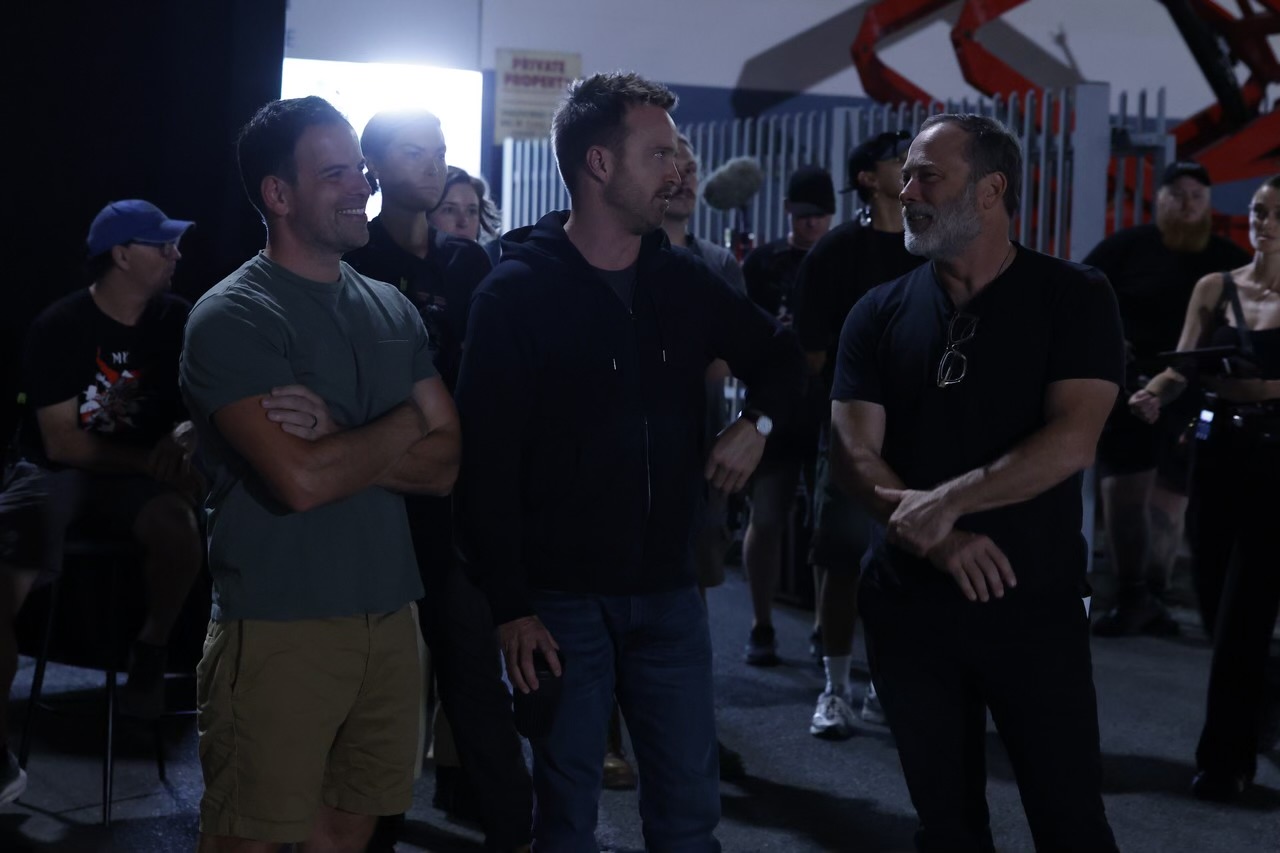
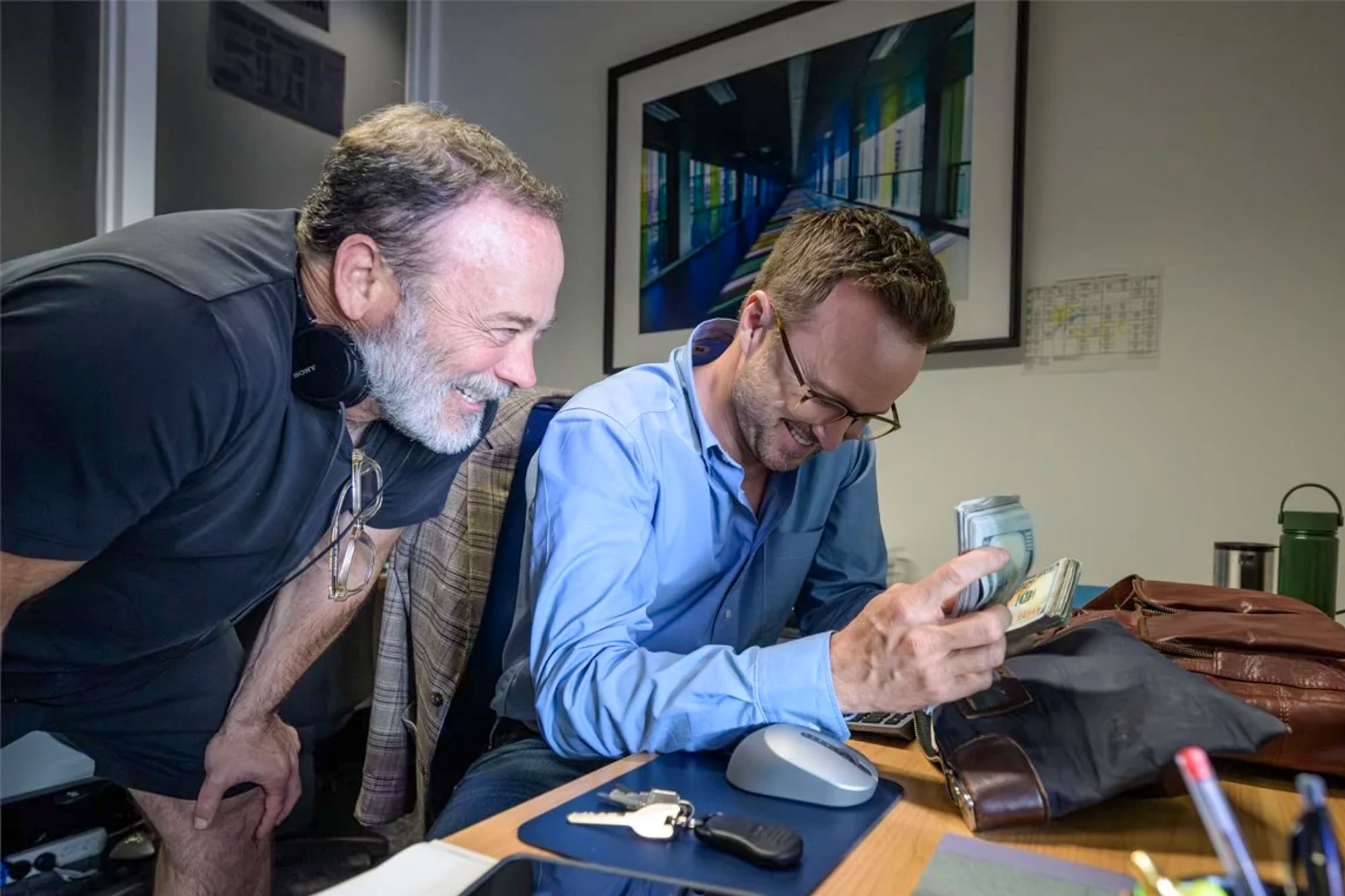
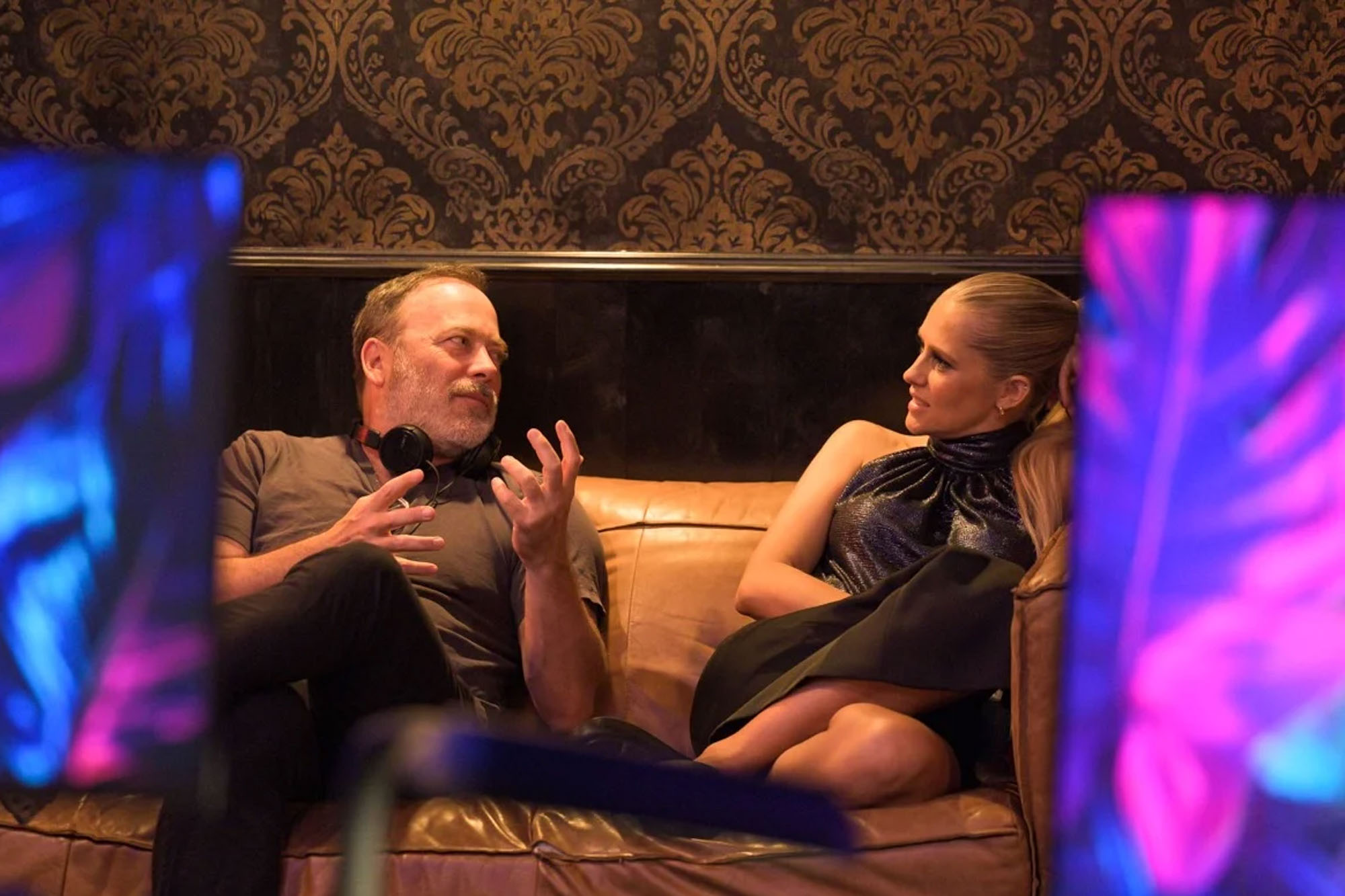
Derrick Borte will be joining RVA Mag at the next Salon de Résistance on July 30 at Black Iris. Stay tuned for more details.
Support RVA Magazine. Support Independent Media in Richmond.
At a time when media ownership is increasingly concentrated among corporations and the wealthy, RVA Magazine has remained one of Richmond’s few independent voices. Since 2005, the magazine has provided grassroots coverage of the city’s artists, musicians, and communities, documenting the culture that defines Richmond beyond the headlines.
But we can’t do this without you. A small donation, even as little as $2, one-time or recurring, helps us continue to produce honest, local coverage free from outside interference. Every dollar makes a difference. Your support keeps us going and keeps RVA’s creative spirit alive. Thank you for standing with independent media. DONATE HERE.
We’ve got merch HERE
Subscribe to the Substack HERE
And Reddit HERE
And YouTube HERE