
In the electric and perpetually sincere terrain of Richmond’s theatre culture, there are institutions that do more than merely reside, they lead. They serve as a measure of our city’s potential beyond its natural aspirations.
I’ve witnessed Firehouse Theatre inhabit that essential niche, becoming the forge where the art takes shape. It isn’t just a stage for viewing. It’s the delivery room where stories are conceived, deconstructed, and hammered into something that truly echoes.
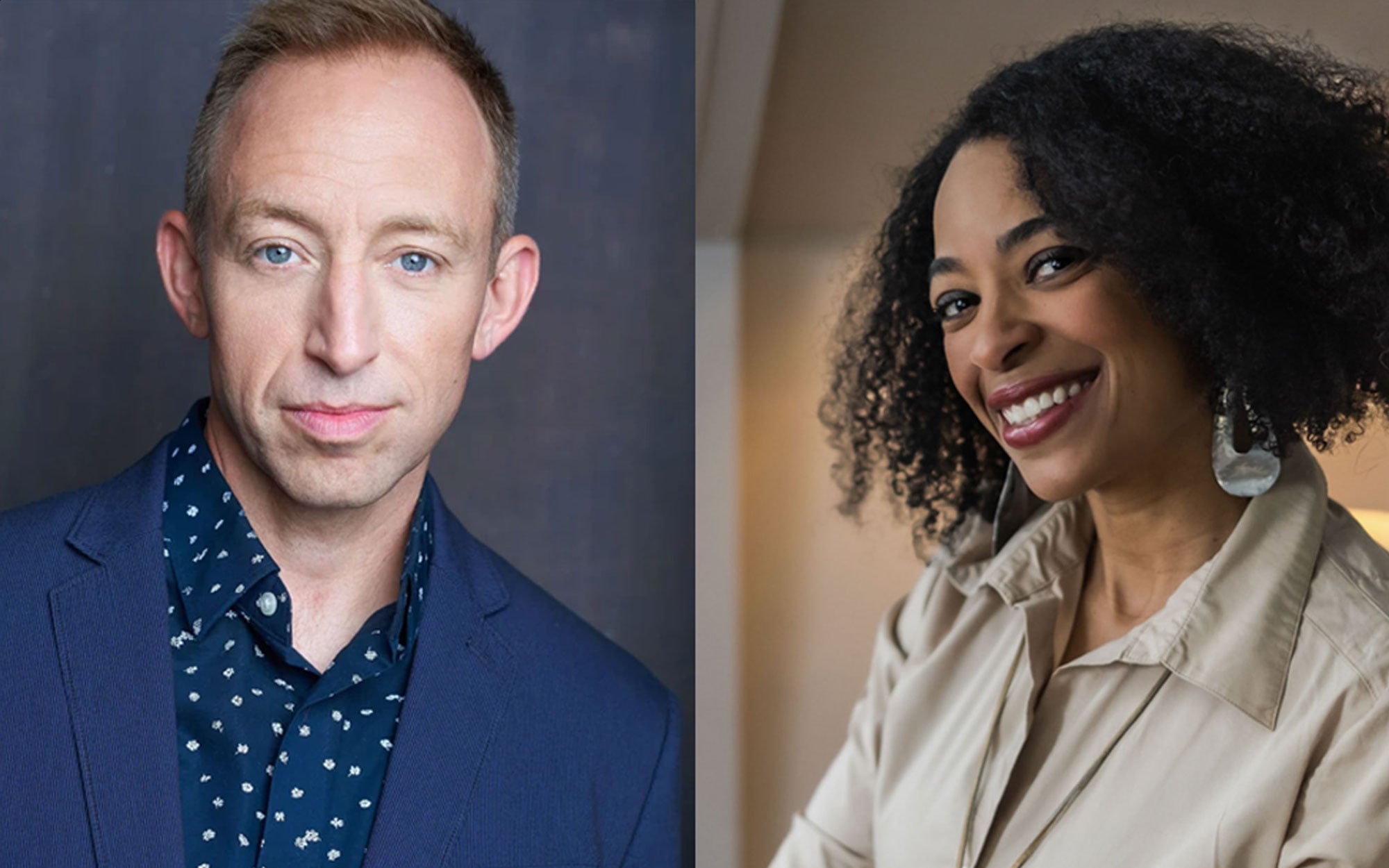
I recently caught up with the duo currently tending to that creative fire: Nathaniel Shaw, now settled into his seat as executive director, and Katrinah Carol Lewis, who has just taken the helm as artistic director. If you have your finger on the pulse of Richmond theatre, these figures are already familiar. They’ve made indelible marks on many local and regional stages, in the wings, and in the heavy lifting of building a legacy.
Our talk, however, moved past the surface level of new titles or the excitement of a fresh chapter. We dug into a foundational evolution of how a theatre in a town like ours can function, expand, and nourish an entire community of creators alongside its audience.
Christian Detres: When exactly did this change over happen? And what was the kind of mood around that?
Nathaniel Shaw: Katrinah’s official start date was July.
CD: This is very new. What’s the new title?
Katrinah Carol Lewis: Artistic director!
CD: Have you had that title elsewhere? Is this a new thing for you?
KCL: No, it’s not a new thing. I was the artistic director at Colonial Williamsburg for about 7 years. I was the associate director at Theatre Lab for a couple of years…
CD: So this is old hat.
KCL: You know, working at Colonial Williamsburg was a very specific kind of theatre. Being an artistic director is a challenging space to be in. It’s also a really exciting space to be in. To be the vision holder, the culture creator, is something that I really enjoy doing. And I’m not doing it alone. I get to do it with my beloved partner, Nathaniel!
I’ve been the associate artistic director for Nathaniel for two years going into this. I’m not new to the organization, and it’s not like I’m coming in asserting a brand new vision for Firehouse. I’m taking the existing vision that I’ve come to love and investing myself in it. I’m putting my own flavour on it while continuing to collaborate with this amazing team.
So is it challenging and scary? Yeah, it’s a little challenging and a little scary, but I feel very prepared to step into leadership. The love, care, and commitment that I have to this community inspires me to look at the challenges and put fear to the side. It’s a path that I didn’t quite choose. The theatre chose me.
To be a leader in theatre is not the same as being an actor, or even a director.
CD: Nathaniel, so you are now the Emperor of Firehouse, right?
NS: (laughs) Yes, that is the title. Actually, executive director.
KCL: Yeah, and I am the Empress. I like that title!
CD: New business cards tomorrow! How does stepping into that role change your day-to-day life? What are you taking on with that role that you hadn’t been responsible for in the past?
NS: Katrinah will say all I ever wanted to do was sing songs and be in plays. For 25 years now, all I’ve said I wanted to be was an artistic director, and I’ve gotten to do that.
We’ve now grown Firehouse with me in that position to a place I didn’t anticipate being in. I inherited a $375,000-a-year revenue organization. We just closed the last fiscal year north of $825,000 in receipts.
With that growth and expansion, both the artistic side and the executive side need full attention. I’ve been what’s known as the producing artistic director, which means I have the sole executive responsibility for fundraising and administration, as well as the primary artistic oversight. I was overinvested in the artistic side for a period of time, so the executive functions of the fundraising side were going to suffer. This new focus will really allow me to prioritize the growth of the organization.
It needed two people taking the artistic and executive roles separately. It’s a very natural progression in that way.
Katrinah probably grows weary of me saying this, but she really has been, for the entire time that I’ve been here, kind of the heartbeat and the pulse of Richmond theatre. Having her on as the artistic director just makes sense. She’s one of the most beloved theatre makers, initially as an actor on stage, but increasingly as a director, and now an institutional leader.
CD: When you move on from stage-level artistic decisions, whether blocking a moment, coaxing a performance out of an actor, or simply being one, and move on to representing the theatre at a cocktail party full of potential donors, the role changes. But you’re still playing a role. In some ways, it’s more acting than being on stage.
But the beauty of the role is that you get to be the one who lights the fuse on the art firecracker and lets it go. The play and performance may be the glory of its explosion, but you’re the only one with the lighter that makes it go boom.
KCL: I’ve been thinking about it a lot as I’m the heart and he’s the brain. The heart and the brain have to communicate to make the body work. That’s a conversation we have been having since I’ve been at Firehouse.
Now I have more agency, more space. We have really robust artistic conversations. We can talk about the big-picture stuff, and we can get really granular.
CD: What particular stories are you guys both into? What do you enjoy plotting and planning around?
NS: This upcoming season happened because of what’s in the air. What we’re both reacting to as human beings living in America in 2026. We curated a response to America’s and Virginia’s 250th. Our entire lineup is reflective of what it is to be American, and how our systems have supported us or failed us.
We provide different looks into the American dream and what it is like to pursue it. The tragedy for many is finding that an empty pursuit. The artistic response is absolutely working in lockstep with that strategic idea.
Looking a season ahead, we have a core commitment to synergistic collaborations. It’s easy to put some buzzy words together, but it does have meaning.
KCL: One of my great joys about Firehouse is that we develop and produce new work. I think that’s a wonderful contribution to Richmond’s playwrights and other playwrights who come and work with us. It’s a way of giving back to this industry that has fed us. It’s a way to ensure that at least some stories that we are wrestling with here in 2026 are being told and become part of a canon that you have in the future.
But one of the heartbreaks is when we develop a really beautiful piece of work and it’s one and done. It has its world premiere in Richmond, and it doesn’t go on to have a life in the theatre. Unfortunately, that’s going to happen sometimes. It happens everywhere, but I think it’s important that we are making our best efforts to build bridges for these new works. Create systems that give these native plays a chance to reach outside of Richmond during the developmental process, through the world premiere, and after.
CD: I’ve actually had this conversation with other people about Firehouse. It stands out from the other theatres in town. When you go to Virginia Rep, it’s soaring stagecraft, beautiful sets, 30 people in the cast, glorious stuff. It’s Broadway on Broad St. I sit there and I love that it’s happening. The spectacle is wonderful.
Firehouse is bringing Broad St. off Broadway. You literally represent Richmond-borne theatre. Your partnership with Cadence in the New Works program is one of the most exciting collaborations in Richmond arts altogether. I think that’s incredibly special.
Every decent arts-forward city should have classic productions and an incubator of local work. Some to tell the stories from away, and others to make our own to send afar. I think it’s a litmus test for whether you’re actually a cosmopolitan destination.
The strength of your theatre scene is as important as your music scene, your art scene, nightlife, museums, and historical architecture. These things only blossom where there’s passion and perspective in a community.
How does that fit in with the ability of Richmond theatre to project itself outside of its own borders?
NS: That’s what we’re working on. It’s what our next season has going for itself, and it’s starting to materialize. We’re building relationships with theatres outside of Richmond so these plays have a chance to extend their audience beyond the city. The majority of our mainstage productions in the 2027/28 season already have agreements for co-productions. Our specific intention of being an incubator for new plays creates an opportunity for Firehouse to be that catalyst in the community.
Part of the value of having a new play process is having an audience along for the ride. Theatre does not happen until the audience is there. And when you’re developing new work, you don’t know what you have until you do it.
A new work might discover something with an audience that you had no idea was going to connect. The play can evolve too. How exciting that is, to embrace the mess a little bit. It’s not about the production at this point. You want it to be good. Your home audience is what helps you hone the work to move on to bigger and farther stages.
We have people who come to every single pop-up premiere, and they’re starting to recognize their role as audience members. Also, let me give a shout out to our resident dramaturg, Claire Wittman. She really helped us curate a post-show discussion process to support the playwright. It helps them know what works, what lags, and where focus should be placed on perfecting the work.
We’re here to invite you into the process. You’re not just there to watch. You’re here to witness, invest, and be a part of the development.
What’s going on right now with Firehouse is quite unusual in the national theatre ecosystem. It’s rare that a theatre says to an artist, “We want to meet you at or very near inception, and we’re going to surround you with compensated artists who are going to walk the journey with you. Through the reading process, through the workshop process. We’re also going to try to build bridges for you to other theatres beyond that world.”
When this job was presented to me, I made it incredibly clear to the board that if they were not interested in pursuing growth in an aggressive way, then I’m not the right person for the job, and that’s perfectly fine. You can continue to have Firehouse as is. It serves a purpose in the community. But if we’re not interested in growing the organization into a first-class incubator of new work, one that builds bridges to Richmond for its artists, then I’m not, you know, I’m not interested.
The board of directors absolutely embraced that growth mentality, and we’ve grown the board. The board boasts a group with diverse professional backgrounds and skills. We’re also growing the physical footprint by purchasing our neighboring building at 1617 W. Broad St. for new office space and much-needed expanded rehearsal space.
CD: That’s a lot to take in and I have nothing but high expectations for you all in this new phase of growth at Firehouse.
Support RVA Magazine. Support Independent Media in Richmond.
At a time when media ownership is increasingly concentrated among corporations and the wealthy, RVA Magazine has remained one of Richmond’s few independent voices. Since 2005, the magazine has provided grassroots coverage of the city’s artists, musicians, and communities, documenting the culture that defines Richmond beyond the headlines.
But we can’t do this without you. A small donation, even as little as $2, one-time or recurring, helps us continue to produce honest, local coverage free from outside interference. Every dollar makes a difference. Your support keeps us going and keeps RVA’s creative spirit alive. Thank you for standing with independent media. SUPPORT HERE.
Subscribe to the RVA Mag Weekly Newsletter HERE
We’ve got merch HERE
Subscribe to the Substack HERE
And Reddit HERE
And YouTube HERE