
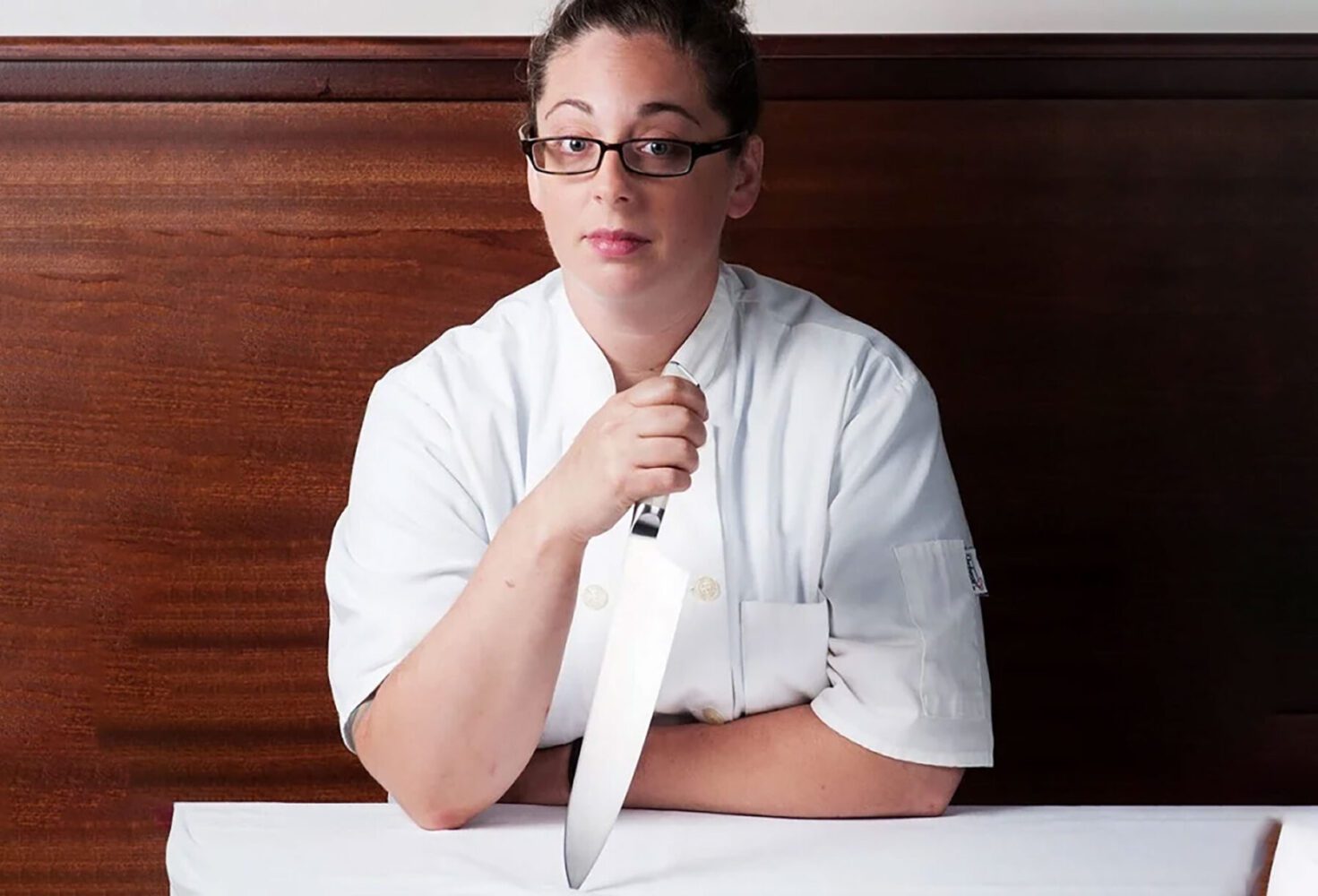
Out of more than 660,000 restaurants in the U.S., fewer than 7 percent are led by female chefs.
The food and restaurant business has an inherent bias against women, and years of discrimination in the industry have made it difficult for them to climb to the top of the ladder. But despite the odds, women are picking themselves up, as they always do, and rising from beneath the weight of their male counterparts to make a new name for themselves.
This holds true for Secco Wine Bar head chef Julie Heins and her battles with sexism and misogyny pushing against her success. While working long hours, Heins has had to sacrifice things that many would deem crucial to a happy life.
Like most, Heins got her start in the industry as a dishwasher, then moved up the chain while working under a pastry chef for several years. The chef taught her all the ropes but steadfastly refused to promote her to the actual position. When Heins realized her setbacks were due to her gender, not her ability, she went off to culinary school—a decision she credits with evening the playing field for her later career.
Eighteen years later, Heins is an experienced chef in a city that’s been named a “Top Destination for Food Travel” by National Geographic. But the field is not friendly. Constant sexual misconduct in the workplace and almost non-existent family leave policies teach women across the service industry that it takes thicker skin, and harder work, to make it.
“Don’t let them see you cry,” Heins explains. “Being a woman, you get judged on attitude and appearance.”
With an average workday of 12 to 14 hours, the idea of having children is often just that, an idea. Women are left with a difficult choice: to begin their families in a situation where most jobs have no maternity leave, and temporary leave can result in positions lost.
“There is an expectation that a woman will, eventually, leave to start a family,” Heins says. “If management already thinks you have a timeline, they won’t invest in you the same way they would a man.”
Kitchens are already a difficult world to navigate as a woman, but the stakes are even higher for people of color and LGBTQ people who are brought into the mix.
“Women from marginalized communities have had to endure racism, misogyny, and sexism while working in the industry,” Heins explains. “It’s crucial to make room for them with intention, and to do the work to be inclusive.”
Historically, in all aspects of society, women of color and queer people receive lower wages, have more limited resources, and must fight systemic oppression in day-to-day life. In the service industry, these setbacks present added challenges in an already competitive field that doesn’t do them any favors as they attempt to move forward.
Many, including Heins, believe a path to stop misogyny across restaurant workers is through mentorship: the women who have “made it” teach new women as they get their start. It is essential to create equal opportunity for all, and for those who have made it before to push for more women and people of color to hold positions of power.
Babe’s of Carytown, one of Richmond’s oldest gay bars, is one of the few places practicing this idea of inclusion. Hiring and creating a safe space for women, people of color, and LGBTQ people, Babe’s has served for years as an example of how to do it the right way.
A jack-of-all-trades, Kat Ray has worked at Babe’s for more than four years. From barback to cook, fixer-upper, and security guard, Ray has done and seen it all in the industry, and understands the implications the field has for the marginalized groups who take part in it.
For over a quarter of a century, Babe’s has been an outlet for women and the LGBTQ community to thrive alongside a family of regulars and employees alike. The kitchen at Babe’s is comprised mainly of queer women, and its owner, Vickie Hester, made it a point to create a safe space for these groups over her years operating the business.
“People gravitate to Vickie and to that space,” Ray says. “It’s where they feel safe.”
Babe’s is a sanctuary, often for those who need it most. The 33-year-old bar is known for its inclusivity, and staff “that doubles as a welcoming committee for anyone who stumbles inside,” as Thrillist wrote when naming it the best dive bar in the state. From its start, Hester ensured the space served as a home for Richmonders of all walks of life, and three decades later, it stands strong.
For the women running the service industry across the nation, the future is looking brighter as earlier successes pave the way for those to come. The number of women-owned establishments, like Babe’s, has increased more than 50 percent in the last decade. Women are rising to the top of their field, and for the first time, the Culinary Institute of America saw more women enroll than men in recent years.
To Heins, in the back of the house, nothing matters more than your skills.
“My favorite thing about kitchens is it’s a great equalizer—you can either cook, or you can’t.”
Support RVA Magazine. Support Independent Media in Richmond.
At a time when media ownership is increasingly concentrated among corporations and the wealthy, RVA Magazine has remained one of Richmond’s few independent voices. Since 2005, the magazine has provided grassroots coverage of the city’s artists, musicians, and communities, documenting the culture that defines Richmond beyond the headlines.
But we can’t do this without you. A small donation, even as little as $2, one-time or recurring, helps us continue to produce honest, local coverage free from outside interference. Every dollar makes a difference. Your support keeps us going and keeps RVA’s creative spirit alive. Thank you for standing with independent media. DONATE HERE.
We’ve got merch HERE
Subscribe to the Substack HERE
And Reddit HERE