

Goose is back in Richmond this week for a two-night stand at the Allianz Amphitheater at Riverfront. For guitarist and vocalist Rick Mitarotonda, it’s another chance to chase what he calls “flow state” the unpredictable current that runs through both their songs and their shows.
“I like the idea of, you know, in a given night anything could stretch out anywhere,” he said. “Obviously there are the ones that kind of take on a life of their own, songs that carry a certain energy and turn into consistent launching places. But I generally like the idea that anything can go. Sometimes you think something’s going to work and it doesn’t. And sometimes something else you didn’t expect suddenly has legs.”
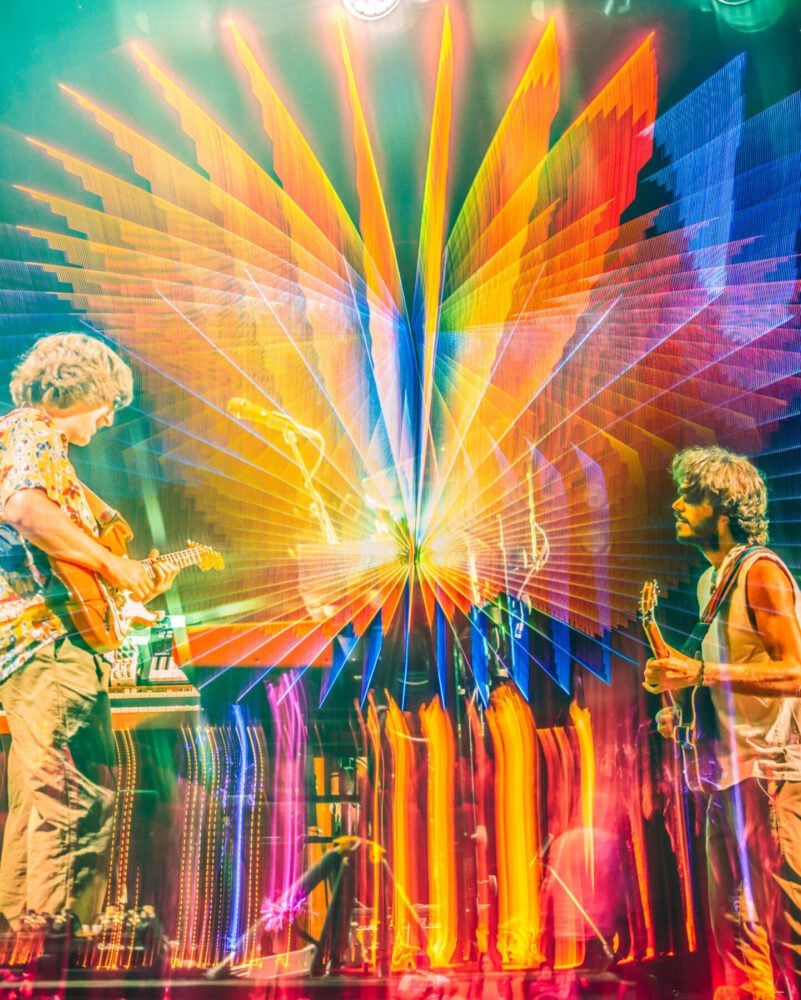
Writing in Flow State
For Mitarotonda, songwriting and improvisation come from the same impulse, the pursuit of flow.
“It’s the same in the sense that, you know, the underlying goal is just to be in flow state, right? So in that sense, it’s totally the same,” he explained. “A lot of times, writing on the road isn’t a thing that happens very often, so little ideas will come here and there, but it’s usually when I’m on my own, or at home or something, in my own little world, that ideas percolate. And then, you know, I do a lot of writing with my good friend Matt. We’ve always had our process together, which is super fun, and it’s always just worked really well, and been a blast working with him.”
“A little seed will come from practicing or improvising. In a lot of ways, it’s coming from the same place, but in different veins. Musical ideas usually come from practicing, but chasing things down lyrically is a whole different animal.”
Loop pedals, he says, have become an essential part of that discovery.
“There’s an interesting thing that happens with loops. I’ll play along with a loop, and then get into a little space that feels compelling or inspiring, and then improvise over it on guitar. I’ll start singing melodies, messing around, and recording it on my phone. Later I’ll listen back, and if I was in flow state, a lot of things come out I didn’t even clock in real time. Then you hear them later, little melodies, ideas, inflections, and they hook you. That’s become more and more of a process, unraveling these secrets of the universe through your own little channel. You’re not aware of it in the moment, but you listen back and certain things just stick out.
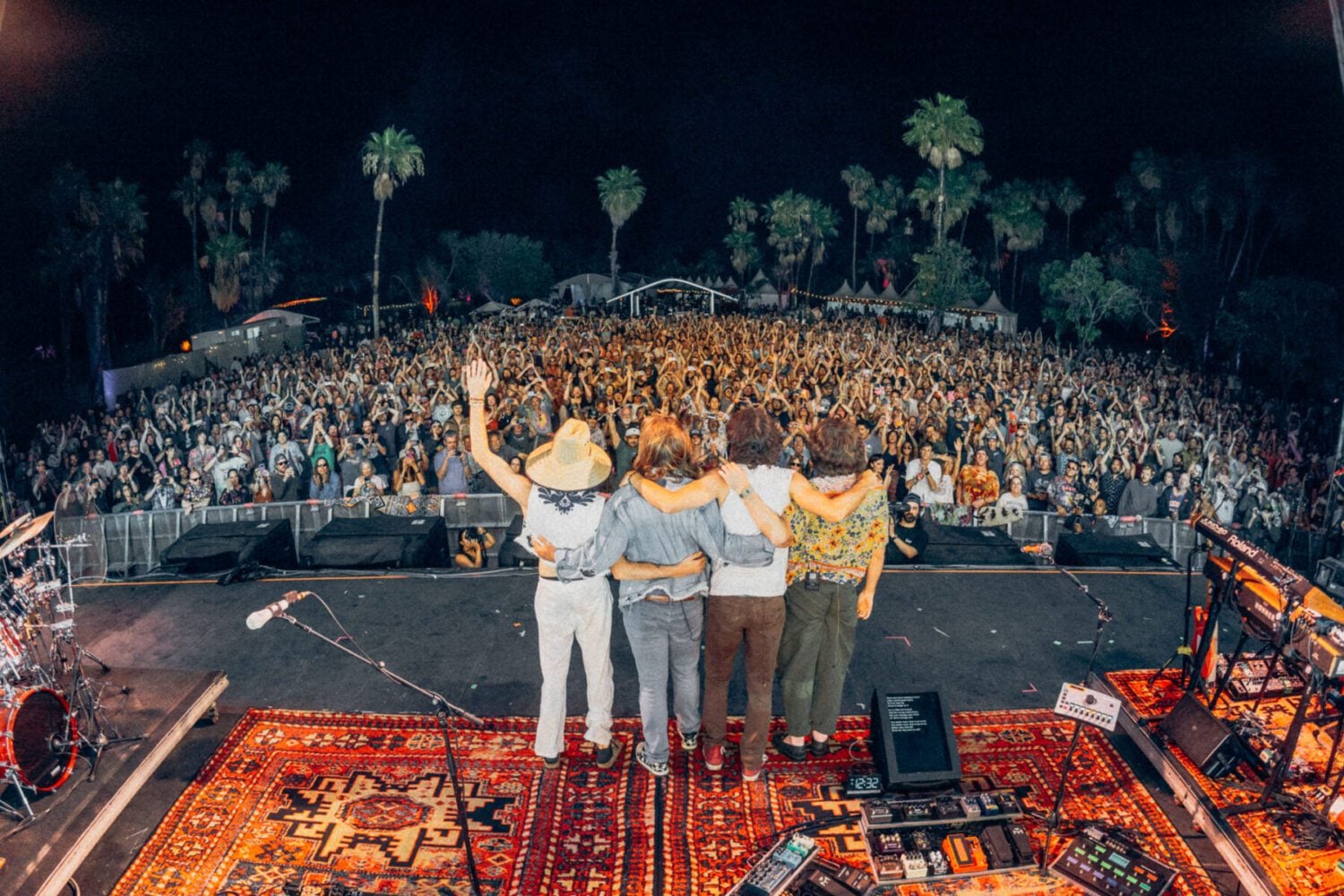
Covers, Dave Matthews, and Modern Influences
Goose’s cover choices have become part of their lore, whether it’s The Who’s Eminence Front or a version of Daniel Lanois’s The Maker with Dave Matthews.
“There’s definitely a list. I’ve got a fat list of ideas and songs that jumped out at me in ways that feel connected to what we already play,” he said. “Sometimes we grab from that, sometimes something pops up out of nowhere and we give it a whirl. And it ends up being really fun.”
Matthews, he says, was central growing up. “I grew up with that music. My sister’s ten years older than me, and in the ’90s in the Northeast, Dave was everywhere. It was very central to my musical upbringing. Widespread Panic came later, middle school maybe. I didn’t go as deep down that rabbit hole, but I loved it.
As Goose evolved, he found himself equally shaped by indie and art rock. “Radiohead, Justin Vernon, Fleet Foxes, Alt-J those struck a nerve for me. Before that I was mostly digging into jazz, Otis Redding, Nina Simone, Bob Marley, older records. But those newer artists over the last ten years informed a lot of our decisions as a band.
From Basement Tapes to Madison Square Garden
Like many lifers, Mitarotonda started small: When asked how long he’d been playing before Goose started gigging, Mitarotonda traced it back to the early 2000s.
“Technically speaking, Goose started playing bars in Connecticut in the fall of 2014,” he said. “But I probably started guitar in 2001 or 2002. My parents rented a guitar from a local music shop and signed me up for a couple lessons. I’d sit in my room, put on a song by Jet, and pretend like I knew how to play which I didn’t.”
The pretending didn’t last long. “Over the next few years I really started studying, learning the instrument,” he said. “But even before I got disciplined about practicing, I was writing. I’d learn a couple chords and immediately try to make up songs. One of the first was about bullies at school. I recorded it on some weird little crappy recorder situation. That’s kind of where it started.”
By middle school, the training wheels came off. “I had a Korg 12-track, a band with my best friend on bass and a drummer, and we recorded an album in my basement. We wrote a bunch of songs. It was a blast. Honestly, that was probably my favorite time, just creatively so free and boundless. We didn’t care if it was good or not. It was pure.”
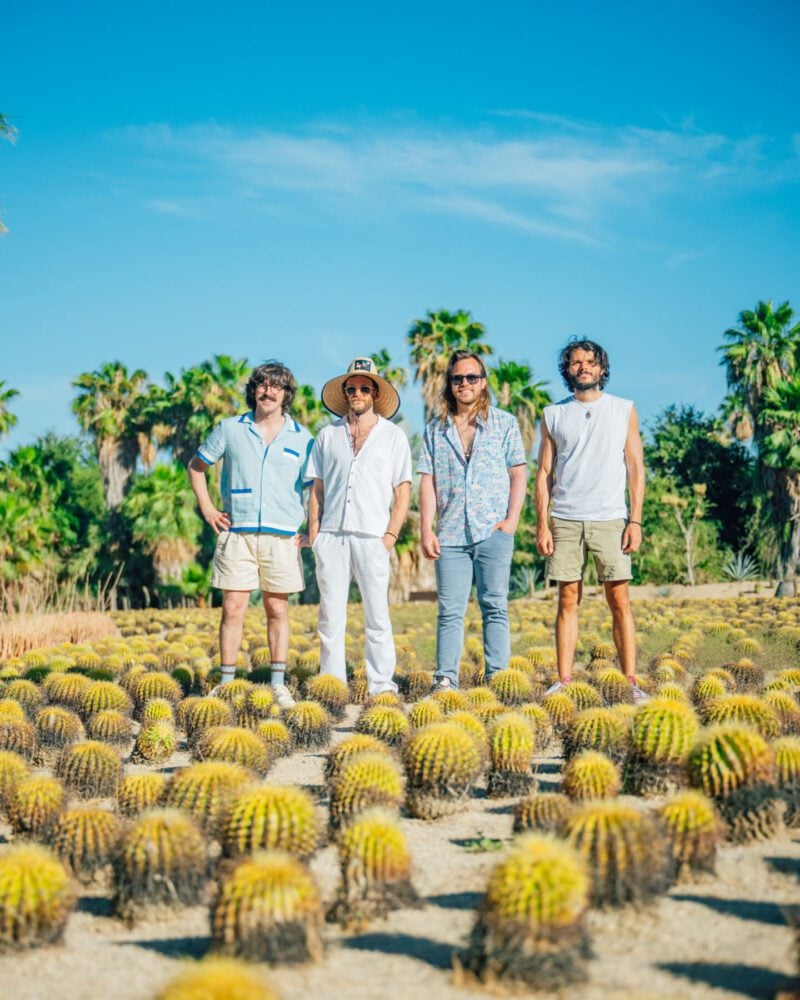
Advice to the Next Kid With A Dream
For Mitarotonda, the advice he gives to young musicians is the same philosophy that’s guided him since those first basement demos.
“Yeah, that’s a tough one,” he admitted when asked what he’d tell aspiring players. “I really feel like it’s just about chasing and following what you’re most excited by tapping into the things that give you electricity and pulling on that cord as much as you can. If it brings you passion, then work as hard as you can at it. The results, or the success, it’s not about that. External success isn’t the point.”
For him, the true work of music isn’t chasing applause, but chasing yourself.
“In truth, playing music, writing songs, developing your craft, it’s a solitary pursuit. It’s a vehicle for self-discovery,” he said. “That’s the coolest aspect of it. Being on stage, yeah, that’s one type of pursuit. You want to be as good as you can be at your instrument, like an athlete pushing toward a peak. But songwriting? That’s different. That’s how you process life.”
When pressed on whether this was what he meant by “flow state,” he expanded:
“You know, sometimes you’re having weird feelings about where you are in life, or something that happened, or something you experienced, and you don’t understand it. Writing about it, writing a song, can help you gain clarity on a feeling you can’t express any other way. Sometimes words alone don’t do it. But a song, some weird little song you write, can. And then you kind of understand it, and release it in some way. That’s the coolest thing about writing songs.
He laughed when asked about his first guitar. It was a classic starter rig: “A red Fender Squier. Came with an amp, a cord, a strap, the whole thing. Like $150. I don’t think I ever gigged with it, though.”
Goose plays Thursday and Friday at Allianz Amphitheater at Riverfront. Get your tickets HERE.
Interview by Scott Dickens
Edit by R. Anthony Harris
Support RVA Magazine. Support Independent Media in Richmond.
At a time when media ownership is increasingly concentrated among corporations and the wealthy, RVA Magazine has remained one of Richmond’s few independent voices. Since 2005, the magazine has provided grassroots coverage of the city’s artists, musicians, and communities, documenting the culture that defines Richmond beyond the headlines.
But we can’t do this without you. A small donation, even as little as $2, one-time or recurring, helps us continue to produce honest, local coverage free from outside interference. Every dollar makes a difference. Your support keeps us going and keeps RVA’s creative spirit alive. Thank you for standing with independent media. DONATE HERE.
We’ve got merch HERE
Subscribe to the Substack HERE
And Reddit HERE
And YouTube HERE