
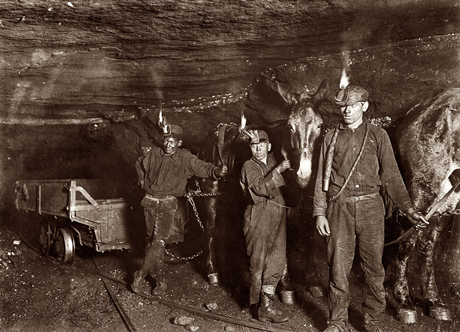
New census numbers show the southwestern region of Virginia is struggling to hold and attract residents, as the population dropped in almost every locality west of Blacksburg this decade.
New census numbers show the southwestern region of Virginia is struggling to hold and attract residents, as the population dropped in almost every locality west of Blacksburg this decade.
The city of Norton was the only bright spot in the region, showing slight growth.
The population fell in 15 counties in Southwest Virginia. Buchanan County was the hardest hit, losing over 4 percent of its population since the 2010 census with an almost 2 percent drop between 2013 and 2014. The region’s officials say every community seems to be struggling, and they all point to the same source.
“It’s because of the decline of coal,” said Dana Kilgore, a member of the Wise County Board of Supervisors. “Miners have to go where they can find jobs.”
Wise County saw its population drop 3.7 percent leaving since the 2010 census and 1.7 percent in the most recent year reflected in data being released Thursday by the U.S. Census Bureau.
The unemployment rate in Wise has historically been higher than the state and national average. As of January, it sat close to 10 percent – about double Virginia’s average.
Michael James, community development director in Lee County, said the fading coal industry has “been an area of intense study for several years,” but no one really knows how to replace it.
“Coal has been the backbone of the economy for so long,” James said. “They’re very high-paying jobs” – up to $60,000-$80,000. “That’s difficult to replace.”
He said the last coal mine in Lee County, where the population has dipped 2.5 percent since 2010, stopped digging a few years ago.
“Initially, I think people thought it was just another trough in the boom-and-bust cycle,” James said. “But I think now that mindset has changed, and people have accepted it as an inevitability.”
In the late 20th century, tens of thousands of miners were employed in Virginia mines. Employment numbers have been slipping for the past 35 years; in 2014, just 3,692 miners were working in Virginia.
In 1980, Virginia produced more than 42 million tons of coal. By 2014, that number had fallen to around 15 million tons. This cut in production, combined with a mechanized extraction process, has led to these significant cuts in employment.
James said he knows some former miners who found jobs in the coal industry in Pittsburgh and West Virginia. Others who left, he said, are probably following the national trend of moving to urban areas.
Currently, the largest employer in Lee County is a federal prison, which houses over 1,600 inmates and employees about 400 people.
The one location in southwest Virginia that has seen an increase in population this decade was the city of Norton. Its population rose less than 2 percent – from 3,958 in the 2010 census to an estimated 4,031 last year.
“I don’t know what to credit for the increase,” said Fred Ramey, the city manager in Norton.
If it was anything, he said, it would be a new affordable housing development that brought in new residents.
Otherwise, Ramey credited a stable economy based on retail and medicine has allowed the commonwealth’s smallest city to keep its head above water.
The census data showed populations declines since 2010 in the Southwest Virginia counties of Giles, Pulaski, Carroll, Bland, Wythe, Grayson, Tazewell, Smyth, Buchanan, Russell, Washington, Dickenson, Wise, Scott and Lee, as well as the city of Galax.
Overall, population fell in 61 of Virginia’s 133 counties and independent cities. Statewide, the biggest drop (7.8 percent) was in Emporia, near the North Carolina line.
West of Tidewater, every locality bordering North Carolina lost population.
On the other hand, several localities – in Northern Virginia, the Richmond area and Tidewater – saw population increases. So far this decade, the population rose 3 percent in Montgomery County, where Blacksburg and Virginia Tech are located; 7.5 percent in the city of Radford; and 11.5 percent in Bedford County.
Virginia’s total population has risen about 4 percent since 2010, including a 0.7 percent increase from 2013 to 2014.