
RICHMOND – At the Virginia Constitutional Convention of 1867-1868, James Carter, who represented Chesterfield and Powhatan counties, introduced a resolution requiring students to attend public school for at least three months a year.
Also at the convention, James William D. Bland, who represented Appomattox and Prince Edward counties, called for guaranteeing the right of “every person to enter any college, seminary, or other public institution of learning, as students, upon equal terms with any other, regardless of race, color, or previous condition.”
In the Virginia House of Delegates in 1879, Johnson Collins, who represented Brunswick County, advocated eliminating the poll tax that prevented many people from voting. He also called for reducing the public debt.
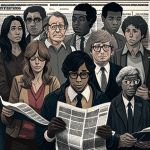
Carter, Bland and Collins were among the first African-American legislators in Virginia. Their biographies are part of an online database that state officials are compiling to ensure that these political figures and their contributions aren’t lost to history.
Created by the state’s Dr. Martin Luther King Jr. Memorial Commission, the database currently features only Reconstruction-era legislators but eventually will include all African-American members of the General Assembly up to the present day.
The database is the brainchild of Brenda Edwards, a staff member for the Division of Legislative Services assigned to the MLK Commission. While doing research years ago, she came across the names of African-American men who participated in the Underwood Constitutional Convention in 1867-68 and in the House of Delegates and Senate of Virginia during Reconstruction.
“I inadvertently made the discovery when fulfilling a research request” from a legislator who wanted to honor a former lawmaker, Edwards said. “I brought my discovery to the attention of the member who requested the research, who requested that the chairman of the MLK Commission add the creation of the database to the commission’s work plan for the commemoration of the 50th anniversary of Brown v. Board of Education.”
Most Virginians don’t know about the African-Americans who were elected to serve in state government in the years shortly after the Civil War. So the MLK Commission decided to take on the task of creating the database. Edwards, former Secretary of Administration Viola Baskerville and the Library of Virginia conducted the research.
According to the commission, Virginia is the only state that has researched and commemorated its early African-American legislators through such a project.
When reading the biographies of black legislators, it is easy to notice that chunks of information are missing compared with their white counterparts. This was due to the blatant discrimination and prejudice during that era. Black men were sometimes former slaves or descendants of slaves, and it was common for them to lack birth certificates, marriage licenses or other documentation.
That has made it hard to acquire well-rounded information on the legislators.
“In constructing the database, the primary challenge was the accuracy of and access to information because little if any information concerning African-American history, culture, achievements, contributions, education, sociopolitical status and biographies was preserved during the slavery and Reconstruction eras, and prior to the civil rights movement,” Edwards said.
“It was difficult for pioneering African-American historians to chronicle the history of black people. Due to the culture during the periods of the ‘Black Codes’ and Jim Crow, curators of African-American history and culture were basically nonexistent.”
The MLK Commission started compiling the database in 2004. In 2013, to celebrate the sesquicentennial of the Emancipation Proclamation, the commission launched the website with a roll call of the African-Americans elected to the Constitutional Convention of 1867-1868 and to the General Assembly during Reconstruction from 1869 to 1890.
Around that time, however, Virginia and other Southern states enacted legislation known as “Black Codes” to thwart the newfound freedoms of former slaves – for example, by imposing poll taxes, literacy tests and elaborate registration systems to keep African-Americans from voting. As a result, from 1890 until the late 1960s, African-Americans were not represented in the Virginia General Assembly.
Finally, in 1967, William Ferguson Reid, a Richmond doctor and civil rights leader, was elected to the Virginia House of Delegates.
Edwards is currently researching the African-Americans legislators in the 20th and 21st century so they can be added to the database in the coming months.
More on the web
To learn more about African-Americans who have served as legislators in Virginia, click here.
Words By Dai Já Norman via VCU Capital News Service