
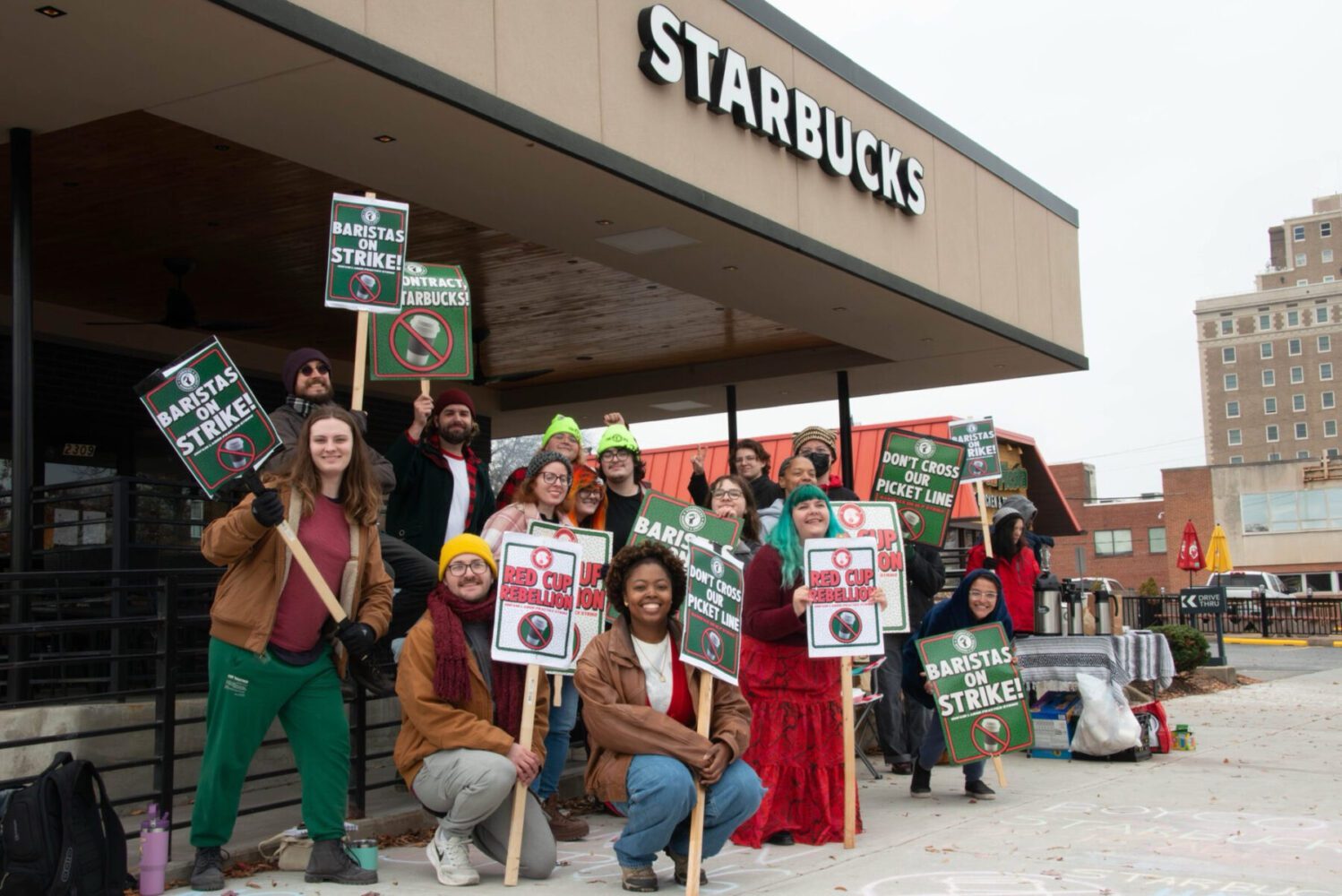
When you talk to the workers on strike outside the Starbucks in the Fan, you don’t hear anything abstract about “labor movements” or “corporate negotiations.” You hear frustration, exhaustion, and a pretty simple question: why won’t Starbucks come to the table?
Last Thursday, baristas at the Robinson Street Starbucks walked out as part of a national Starbucks Workers United strike, one of the largest coordinated actions the company has faced to date. Their Fan location has been closed since Saturday afternoon. For a store that runs one of the few drive-throughs in the city, that’s not nothing.
Workers say the Fan location routinely hit $10,000 in revenue on its strongest days, especially after the Arthur Ashe Boulevard and VCU pickup locations went offline. With the strike shutting down the store entirely, that puts Starbucks’ local losses somewhere between $6,000 and $10,000 every day, or roughly $30,000–$50,000 so far. And that number goes up daily.
Lilith Vought, a barista coming up on three years with the company, says Richmond workers saw this moment coming.
“We unionized over the summer,” she told RVA Magazine. “We expected Starbucks to negotiate. When they walked away from the table, it became clear this might happen. We’ve been getting the store ready to strike ever since.”
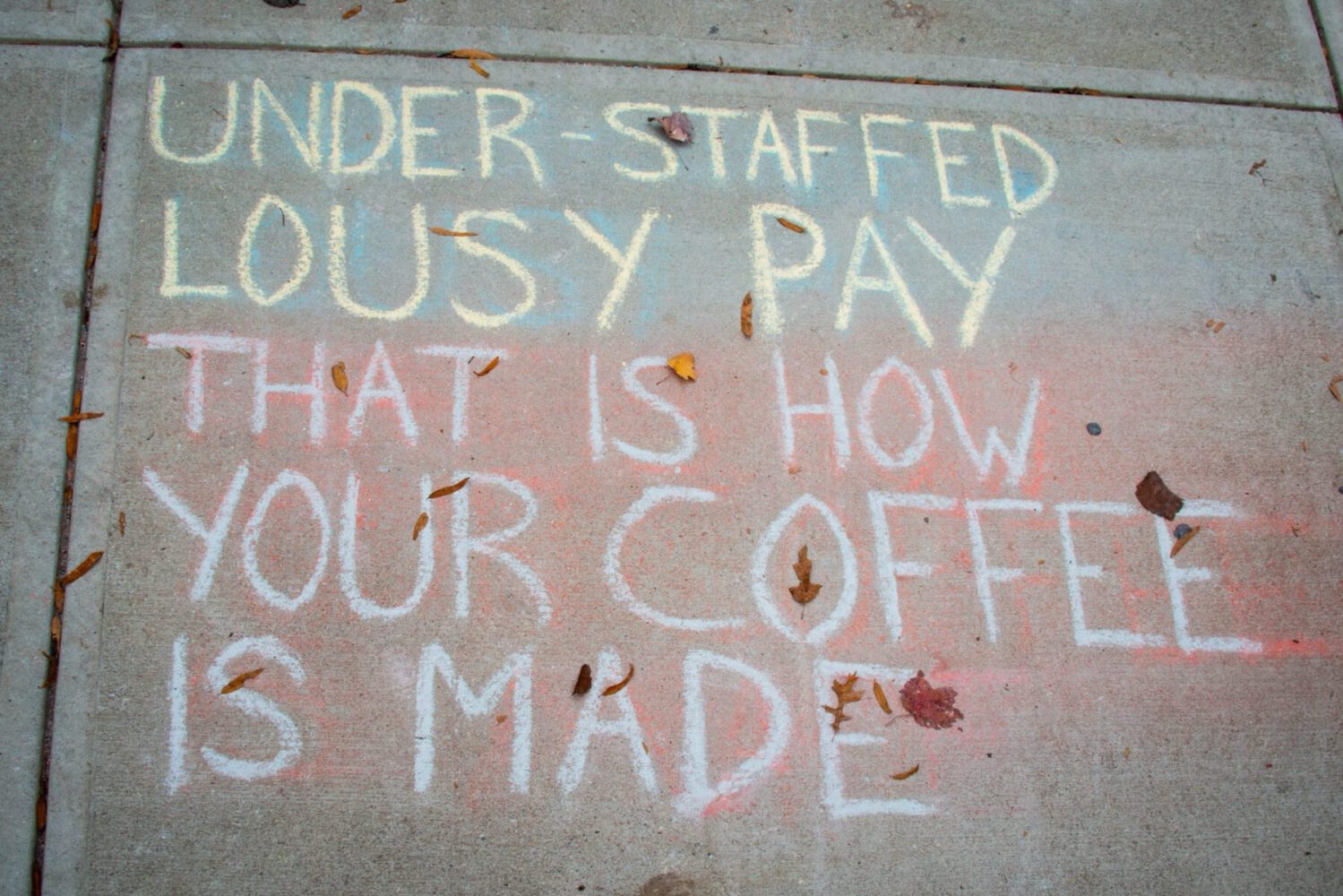
Why They Unionized
For Vought, the original draw to Starbucks was the same pitch the company built its reputation on: decent benefits for part-time employees, a college program, and a sense that the company was a welcoming place for LGBTQ workers. But the day-to-day reality, especially over the last few years, didn’t match that reputation.
“Last summer it was promo after promo, buy one drink, get one free. Traffic doubled, but our compensation didn’t,” she said. “It just felt like the company takes us for granted.”
Workers at the Fan store, like many across the country, pushed to unionize in search of two basic things: stability and respect. According to Vought, the biggest issues on the table aren’t complicated:
- Wage increases that actually match the workload
- Enough staffing to run a store without burning people out
- Scheduling that doesn’t jeopardize access to benefits like healthcare
- A contract that can’t be unilaterally rolled back
“We could have had a contract already,” she said. “We’re willing to work with the company. The company just doesn’t want to work with us.”
Organizing in Richmond
The Fan location wasn’t the only store wrestling with whether to unionize, but it was one of the first to move. Conversations started quietly, workers debating whether it was worth the risk, whether coworkers might run to management, whether Starbucks would retaliate.
“It took some convincing, mostly because of fear,” Vought said. “But once people saw how much we do in a day and how little control we have over decisions that affect us, it started to click.”
Once they unionized, the day-to-day didn’t change much, mostly because Starbucks hasn’t shown up to negotiate. Workers do have representation during disciplinary issues now, which Vought says has been one real improvement. But the larger issues remain stuck in limbo.
A National Movement With Local Consequences
The Richmond strike isn’t happening in a vacuum. Workers United coordinated actions across the country, from LA to New York, all aimed at the same thing: pressuring Starbucks to negotiate a first contract.
“I think we’re having an effect, at least locally,” Vought told us. “We’ve kept our store shut down since Saturday.”
On the national level, workers pointed to a major action in York, Pennsylvania, where baristas picketed outside a Starbucks distribution center and turned delivery trucks away, disrupting operations for stores across the East Coast.
Here in Richmond, workers say the community has shown up.
“We just want to thank the people of Richmond for all the love and support,” Vought said.
How Long Will the Strike Last?
There’s no end date.
Workers walked off the job on November 13 and say they’ll stay out until Starbucks returns to the bargaining table. Since Starbucks corporate directly owns most stand-alone stores, including this one, the decision sits at the top of the company, not with local managers.
Until then, the Fan location stays dark.
To show your support, you can go HERE
Photos by Adrienne Danielle
Support RVA Magazine. Support Independent Media in Richmond.
At a time when media ownership is increasingly concentrated among corporations and the wealthy, RVA Magazine has remained one of Richmond’s few independent voices. Since 2005, the magazine has provided grassroots coverage of the city’s artists, musicians, and communities, documenting the culture that defines Richmond beyond the headlines.
But we can’t do this without you. A small donation, even as little as $2, one-time or recurring, helps us continue to produce honest, local coverage free from outside interference. Every dollar makes a difference. Your support keeps us going and keeps RVA’s creative spirit alive. Thank you for standing with independent media. DONATE HERE.
We’ve got merch HERE
Subscribe to the Substack HERE
And Reddit HERE
And YouTube HERE