A mural in Richmond’s Northside has sparked a complex debate about public art, race, and neighborhood change, with artists, community leaders, and residents weighing in on how public art intersects with neighborhood history.
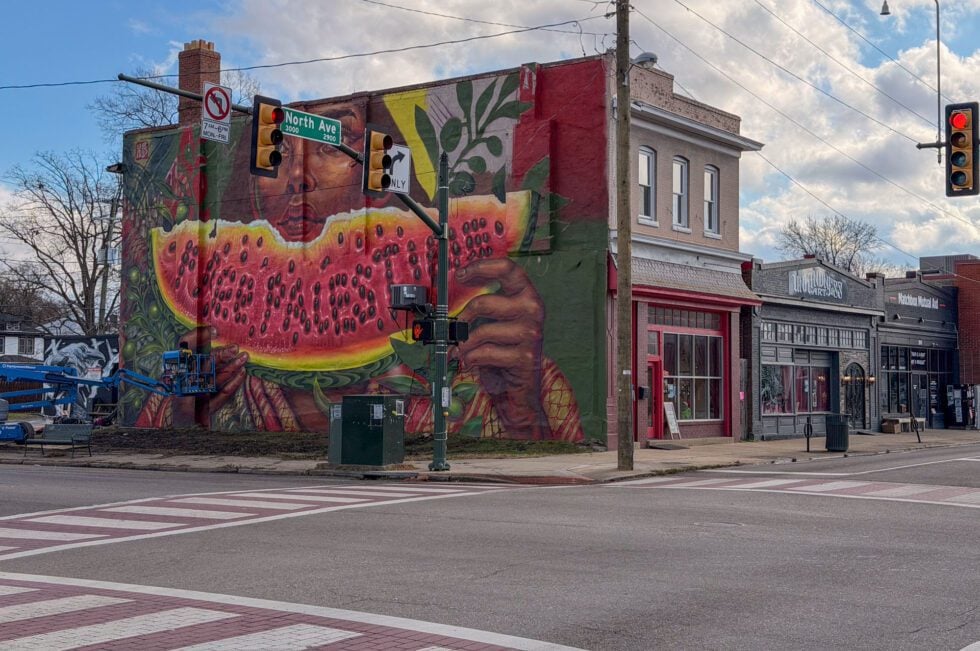
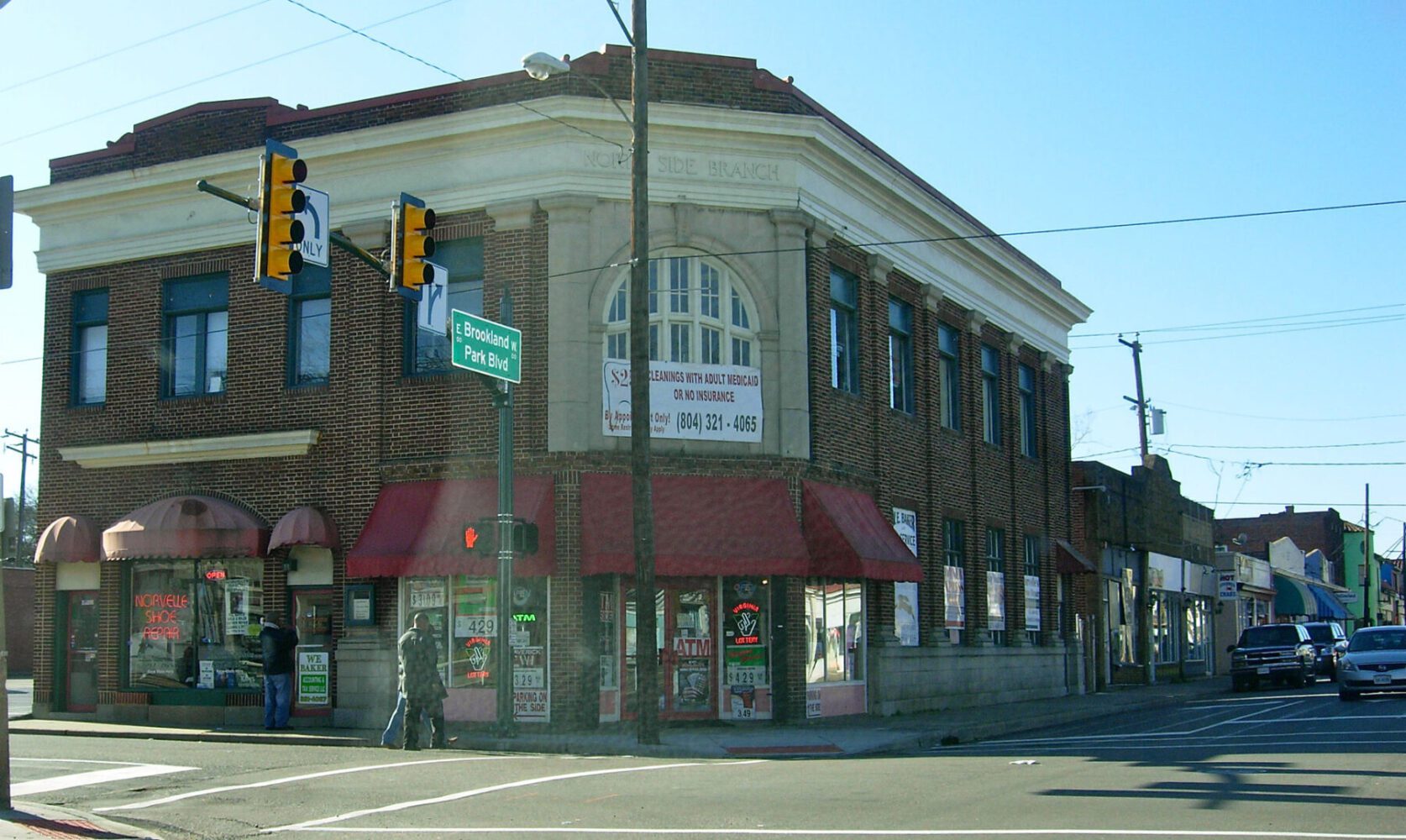
The mural, painted by artist Lauren YS, depicts a woman holding a slice of watermelon with seeds spelling out “Free Palestine.” Since appearing on a building near the intersection of North Avenue and Brookland Park Boulevard, the image has sparked a broader discussion.
Last week, a group of local leaders held a press conference at the site to express concern about the imagery and the process behind the mural’s installation.
Civil rights advocate Gary Flowers said the issue is not simply about the artist’s intent but about the effect of the image in a historically Black neighborhood.
Flowers, who lives nearby and was born four blocks from the mural site, said he was “shocked beyond measure” when he first saw it.
“Passing by that intersection, I said, ‘Why is a watermelon, which was used as a defamatory symbol to Black people, being placed here?’” Flowers said.
Flowers emphasized that he understands the symbolism of the watermelon in Palestinian protest culture and personally supports the Palestinian cause. Over the course of his career, he said he has worked alongside leaders such as Rev. Jesse Jackson and met with Palestinian officials including Yasser Arafat.
But for him, the location of the mural matters.
“The question is not the intention of the artist,” he said. “The question is the effect.”
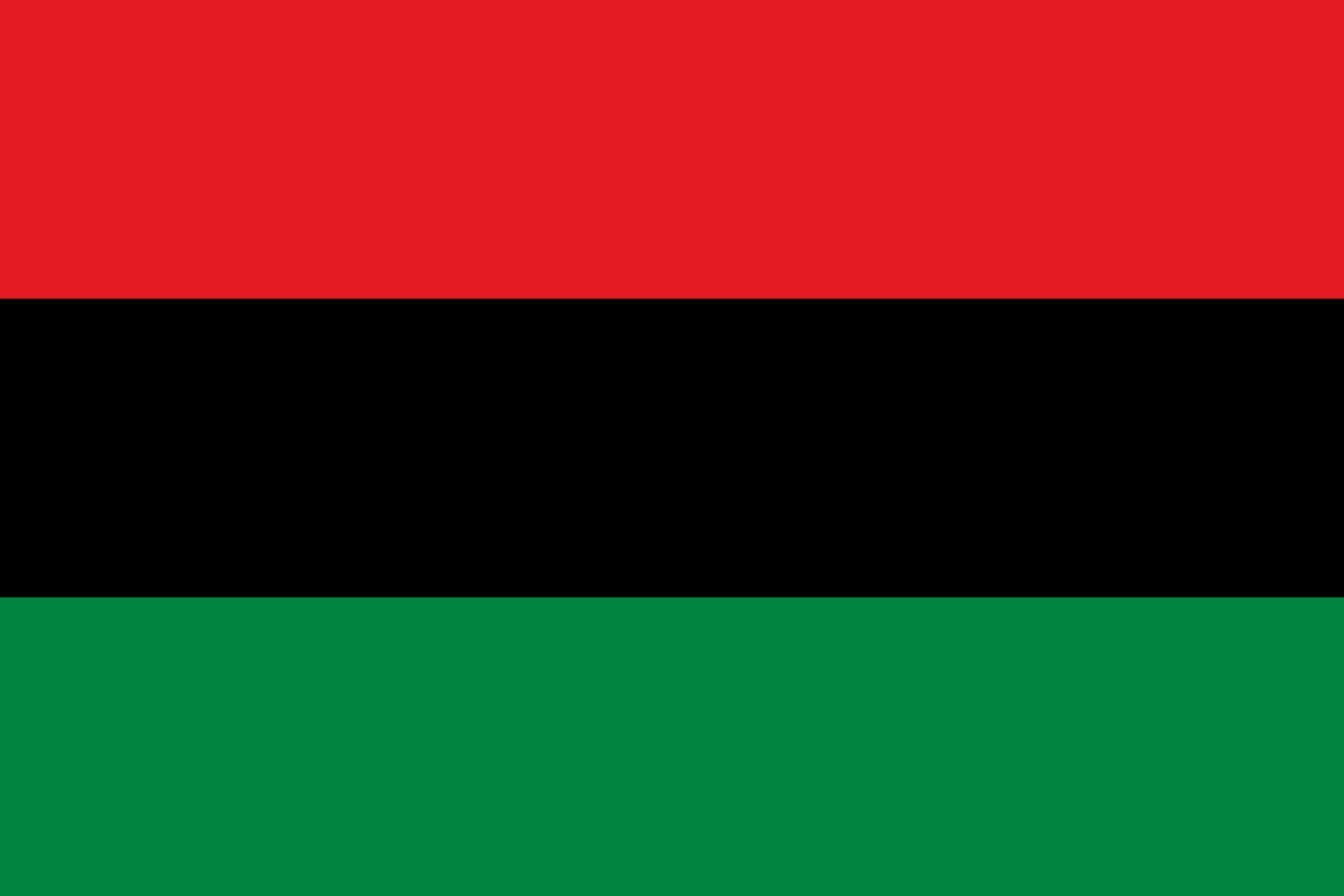
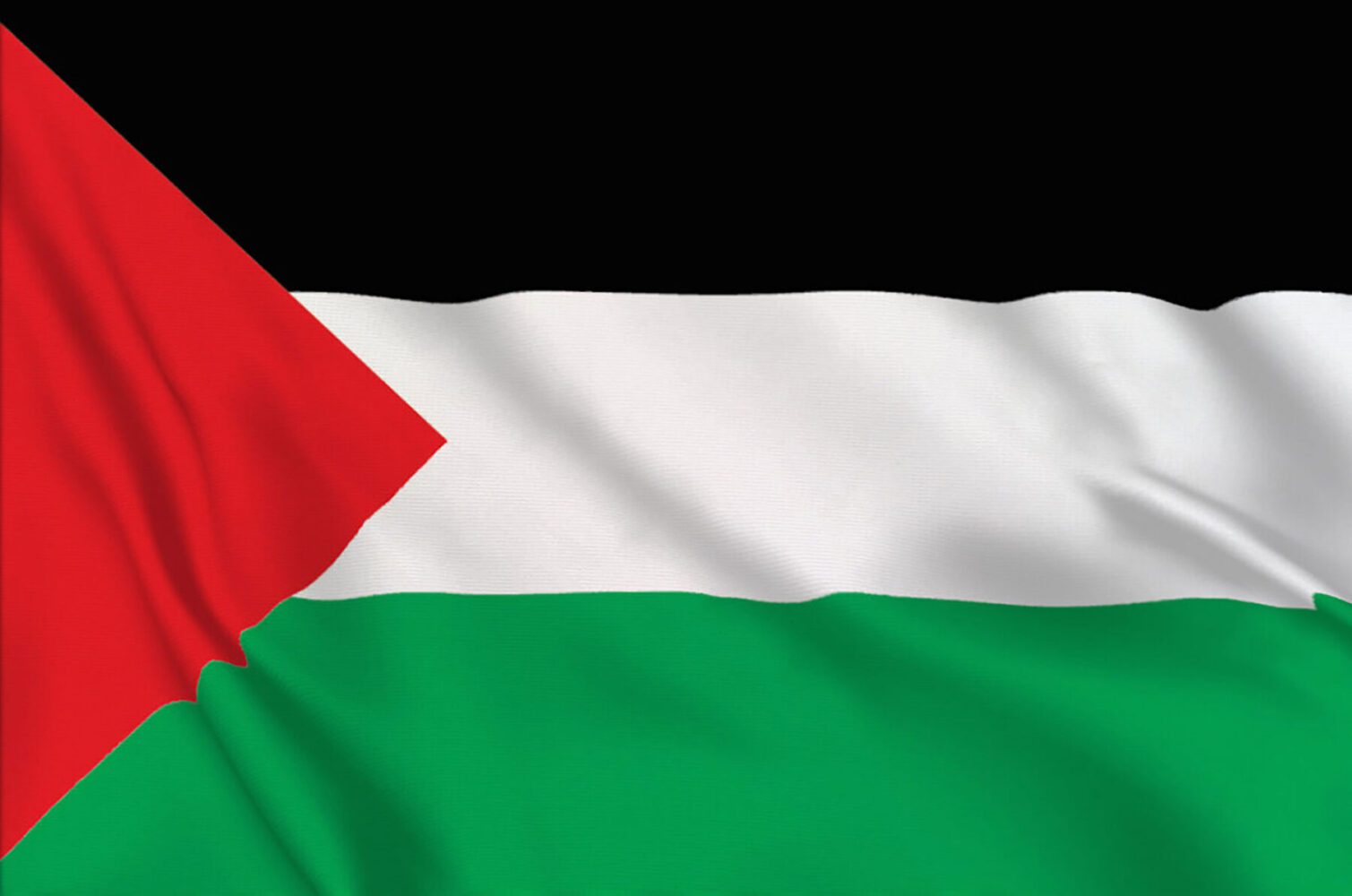
Black Liberation flag and the Palestinian flag
A Call for Modification, Not Removal
Flowers said community leaders are not asking for the mural to be taken down entirely.
Instead, they have proposed modifying the image by replacing the watermelon with two flags: the Palestinian flag and the Black liberation flag associated with Marcus Garvey.
He believes that change would maintain the mural’s message of solidarity while removing imagery that many African Americans associate with racist caricatures.
“That would unite the Palestinian struggle and the African American struggle for liberty and justice,” Flowers said.
Flowers also questioned why an image with such complicated racial symbolism appeared in Northside, a historically Black neighborhood.
“Why here?” he asked during the press conference. “Would this be in Carytown? Would this be in Windsor Farms? Would it be in Ginter Park? I don’t believe it would.”
For Flowers, the concern is not about the artist’s political message but about how the imagery reads in a community with a long history of racial stereotyping.
He said the pose of the figure and the oversized watermelon reminded him of early twentieth-century “Sambo” imagery historically used to demean African Americans.
“I’m not accusing the artist of that,” Flowers said. “But it looks awfully similar.”
An Artist’s Perspective
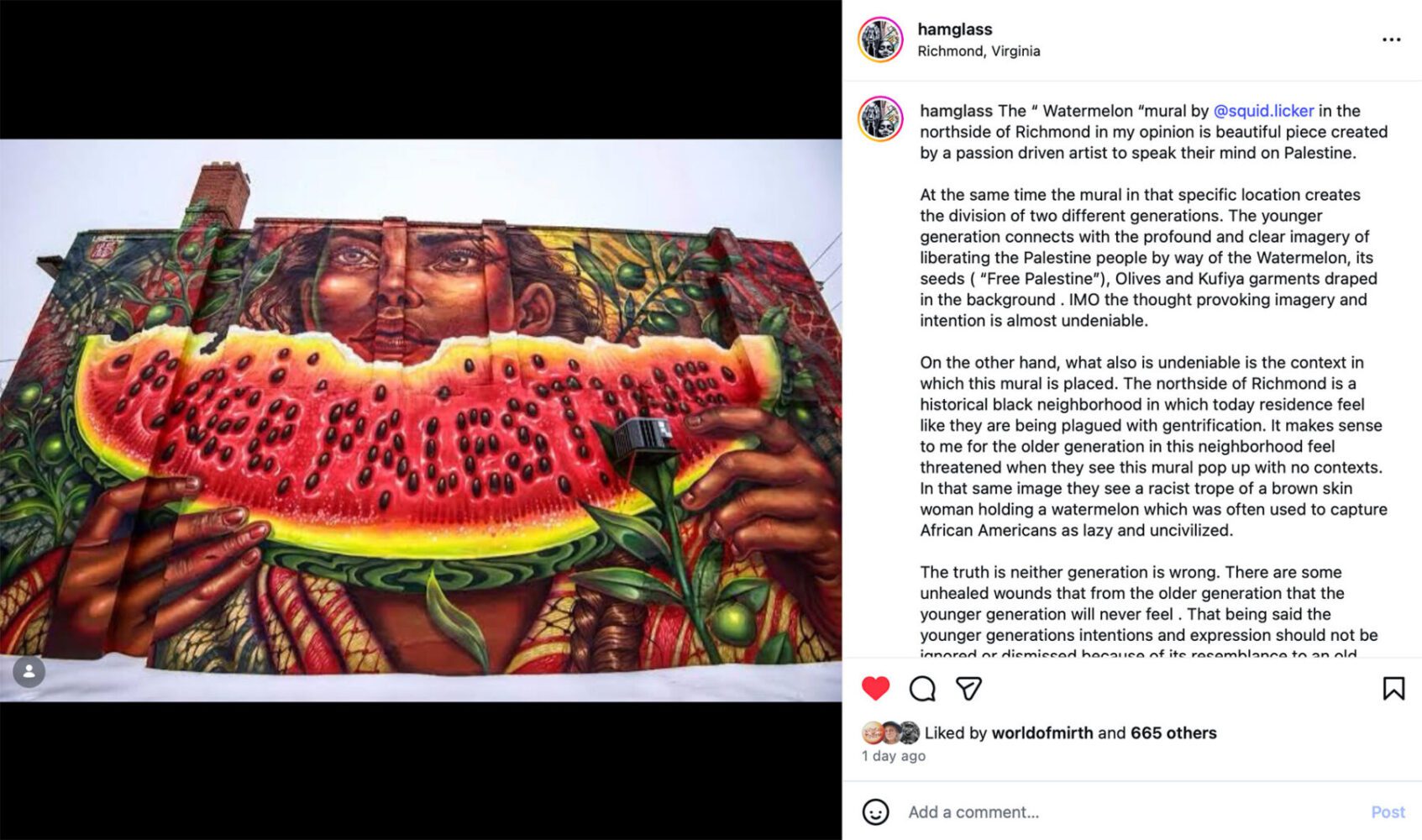
Richmond muralist Hamilton Glass has also entered the conversation, offering a perspective shaped by years of community-based public art across the city.
Glass said what he sees unfolding around the mural is less a single argument than two separate conversations colliding in the same place.
“It’s two conversations trying to be had,” he said. “And each of them thinks they’re related.”
One conversation centers on Palestinian solidarity and the symbolism of the watermelon within that movement. The other centers on the history of racist imagery in the United States, where depictions of Black people with watermelon were used to demean and stereotype African Americans.
Glass said the challenge is that the mural sits at the intersection of those two historical meanings. Some viewers see a symbol tied to Palestinian resistance, while others see imagery connected to a long history of racist caricature in the United States.
Glass said the disagreement is often being framed as a generational divide, though he acknowledged that description is imperfect.
“The truth is neither generation is wrong,” he said. “There are wounds from the older generation that the younger generation will never feel.”
At the same time, he said younger activists connecting the mural to Palestinian solidarity are also expressing their own political values and identity.
“You can’t dismiss that,” Glass said. “You would literally be fighting against the thing that you’re fighting against on another side.”
For Glass, the deeper issue may be the absence of early community engagement before the mural was installed.
“There’s an art to community engagement,” he said. “It’s never the easy thing to do. It takes time. It takes buy-in.”
He also believes the controversy may now create an unexpected opportunity.
“This is a really good opportunity to talk about both of these things,” Glass said. “Maybe in the same space.”
Another Voice From the Neighborhood
Northside resident and food justice activist Duron Chavis also attended the press conference and said he came away with a very different perspective on the mural.
Chavis, who lives just a few blocks from the artwork on North Avenue, said he immediately supported the piece when he first saw it.
“I live four blocks up from it,” he said. “When I saw the mural, I thought it was amazing. I think it’s a great example of the kind of discourse we should be having around public art.”
Chavis said he believes the controversy surrounding the mural reflects what he described as misplaced or performative activism, arguing that far more urgent issues are affecting many Black residents in Northside.
“We have so many issues in the Black community,” he said, pointing to rising housing costs, access to healthy food, deteriorating housing conditions for seniors, and rising energy bills. “Those are the things we should be holding press conferences about.”
Chavis said the focus on the mural risks distracting from those everyday challenges.
“We’re talking about a mural while people are struggling with housing, food access, and utility costs,” he said.
He also noted that while the mural has sparked intense local debate, no one has been harmed because of the artwork itself.
Chavis said he knows Palestinians living in the community who have lost family members in the conflict overseas, which he said makes it difficult for him to dismiss the mural’s message.
For Chavis, the mural’s message itself is clear.
“It obviously says ‘Free Palestine,’” he said. “I’m not going to pretend to be offended by something that clearly has a political message about what’s happening in Gaza.”
Chavis said the artwork could have been an opportunity to highlight solidarity between movements for justice.
“This could have been an opportunity for Black and brown solidarity,” he said.
He also said he would prefer to see the conversation shift toward expanding public art in Northside rather than removing the mural.
“If people feel strongly about it,” Chavis said, “let’s work together and raise money to put up more public art in Northside.”
The Building Owner Responds
Building owner Teresa Sharpe said she offered the wall on Brookland Park Boulevard because she believes art can spark conversation about social issues.
“In short, because I believe in art as a means to reach the community and bring dialogue and awareness to social injustices,” Sharpe said.
Sharpe said she has long admired the work of artist Lauren YS and offered the wall after the artist posted online looking for a space for a “Free Palestine” mural.
“There was no guarantee that Lauren would choose our wall,” Sharpe said. “They are a globally recognized artist with access to many cities. Needless to say I was excited to host such an amazing artist with such passion for the work they do, which often brings awareness to different injustices happening all over the world. They have written a beautiful statement to accompany the piece as well and have been accessible to anyone with questions about the mural.”
Sharpe said she expected the mural might spark debate about the war in Gaza and Palestinian solidarity, but did not anticipate the specific concerns that have since been raised about the imagery and its placement in Northside.
She said the artist worked intentionally to make the mural’s message clear.
“I did consider how the overall intent of the mural would be received, and I was prepared for controversy centered around the Palestinian genocide,” Sharpe said. “The artwork was designed by Lauren, and they worked very hard to make sure the keffiyeh scarves, olive branches, and the words ‘Free Palestine’ spelled out in the seeds made the intent and context of the mural undeniable.”
Sharpe added that the artist has said any similarities to harmful imagery are unintentional.
“As Lauren has stated, any similarities to harmful imagery are completely unintentional,” she said. “Better context is also available by talking to the many Black activists who have already spoken out in support of the mural.”
Sharpe also noted that no public funding was used to create the mural.
“It was all paid for by the artist,” she said.
Sharpe said she mentioned the project at a Brookland Park Business Association meeting before the mural was painted and also spoke with nearby neighbors.
“I mentioned at a Brookland Park Business Association meeting that we would be putting up a pro-Palestine mural,” she said. “I didn’t have a copy of the artwork at the time, and no one asked to see it.”
She added that many neighbors have expressed support for the mural since it was completed.
“Many have also asked that I leave it up despite the current controversy,” she said.
While acknowledging the concerns raised by some community leaders, Sharpe said she hopes the moment can become an opportunity for dialogue rather than conflict.
“This piece was designed with education in mind,” she said. “And it is doing that in ways that were unforeseen at the time of its creation.”
Sharpe said she would prefer to add more context to the mural through educational materials such as plaques or QR codes rather than altering the artwork.
She also said artists and community members are planning a public “teach-in” event in April to encourage discussion.
A Neighborhood in Transition
The intersection where the mural stands has also become a flashpoint for a broader conversation about how Northside is changing.
Flowers said the neighborhood where he grew up has shifted dramatically in recent years.
“The all-Black neighborhood in which I grew up is now about 70 percent white and a younger generation,” he said.
For him, the mural raises a larger question about who is shaping the cultural landscape of historically Black neighborhoods as new residents and businesses arrive.
Richmond muralist Hamilton Glass sees that same tension from another angle. In his view, the controversy surrounding the mural may be surfacing conversations that were already simmering beneath the surface in Northside.
“This is the opportunity to talk about what’s happening in that neighborhood beyond the mural,” he said.
Glass pointed to the steady wave of new businesses and residents along Brookland Park Boulevard and the broader changes happening across Northside.
“There are people coming into your neighborhood who are not considering you,” he said. “Not because they want to disrespect you, but because the community voice isn’t being heard.”
Building owner Teresa Sharpe said she understands that dynamic and hopes the mural can become part of a broader conversation about the neighborhood rather than a point of division.
“As a newcomer to this space, though not new to Richmond, it has always been my intention to help build up this community. In the last decade both of my businesses have done a lot of fundraising for RVA Community Fridges, RRFP, Side by Side, and Richmond Bail Fund to name a few. However, as of right now I am doing my best to allow everyone space to talk and share their concerns or support for this piece.” she said.
Northside resident and food justice activist Duron Chavis said the debate has also highlighted deeper concerns affecting many longtime residents.
“We have so many issues in the Black community,” he said.
Chavis pointed to rising housing costs, access to healthy food, and deteriorating housing conditions for seniors as examples of challenges affecting residents in the neighborhood.
He also raised questions about economic power and ownership along Brookland Park Boulevard, arguing that the conversation around the mural risks overshadowing larger structural issues.
Chavis said he believes more attention should be given to who owns property in the corridor and how development decisions are shaping the future of the neighborhood.
A Possible Path Forward
Flowers said community leaders would like to convene a broader public forum in Richmond to discuss the issue and the history behind the imagery.
Glass hopes the moment can become an opportunity for education and community engagement rather than simply a demand for removal.
Building owner Teresa Sharpe said she is also interested in expanding the conversation. She said artists and community members are planning a public “teach-in” in April that will include speakers, food, and music aimed at creating space for dialogue around the mural and the issues it has raised.
Northside resident and food justice activist Duron Chavis said he would prefer to see the conversation move toward creating more public art in the neighborhood rather than removing the mural, while also focusing on issues residents can touch, hear, and feel in their daily lives.
As Richmond continues to grow and change, the debate surrounding one mural in Northside is revealing something larger than a disagreement over public art. It reflects a city wrestling with history, symbolism, and the realities of neighborhoods that are changing quickly.
Whether the mural remains unchanged, is modified, or becomes part of a larger public conversation, the discussions it has sparked are already reaching beyond a single wall.
The following statement was distributed to media outlets ahead of a press conference held at North Avenue and Brookland Park Boulevard regarding the Northside mural.
Community Leaders to Hold Press Conference Regarding Watermelon Mural on Richmond’s Northside
Richmond, VA — Concerned residents and local advocacy organizations will hold a press conference at 3:00 PM this Friday, February 27 at the intersection of North Avenue and Brookland Park Boulevard to address community concerns surrounding the recently installed watermelon mural and the profane message on a public right-of-way.
One mural, depicting an Afro-Palestinian woman holding a watermelon slice with embedded political messaging, has raised serious concerns among members of the Northside community due to the longstanding racist history of watermelon imagery in the United States and the impact such imagery can have in historically Black neighborhoods.
Community leaders state that the murals were installed without sufficient local consultation and fail to fully acknowledge the painful legacy of racial stereotypes associated with watermelon imagery. Residents have expressed distress about the murals and the profanity placed within their neighborhood, particularly within sight of a school.
The press conference will provide an opportunity for community leaders, residents, faith leaders, and advocacy organizations to:
• Share concerns about the racial and cultural implications of the mural
• Share concerns about profane language in public art
• Discuss the importance of meaningful community engagement in public art decisions
• Call on city leaders, cultural agencies, and property owners to enter constructive dialogue with residents
Event Details
Location: Intersection of North Avenue & Brookland Park Boulevard — Northside, Richmond, VA
Time: 3:00 PM, Friday, February 27, 2025
Media Contact: Gary Flowers
Garyflowers7@gmail.com
Support RVA Magazine. Support Independent Media in Richmond.
At a time when media ownership is increasingly concentrated among corporations and the wealthy, RVA Magazine has remained one of Richmond’s few independent voices. Since 2005, the magazine has provided grassroots coverage of the city’s artists, musicians, and communities, documenting the culture that defines Richmond beyond the headlines.
But we can’t do this without you. A small donation, even as little as $2, one-time or recurring, helps us continue to produce honest, local coverage free from outside interference. Every dollar makes a difference. Your support keeps us going and keeps RVA’s creative spirit alive. Thank you for standing with independent media. DONATE HERE.
We’ve got merch HERE
Subscribe to the Substack HERE
And Reddit HERE
And YouTube HERE