Editor’s Note: The following essay is by Mary Graham, CEO of READ RVA, a Richmond-based nonprofit focused on adult literacy.
I learned early not to assume anything about who can read.
A man once stopped me on Broad Street. He held out a scrap of paper with an address and directions scrawled across it and asked if I could read it. He didn’t fidget—he just stood quietly while I read the words aloud. When I finished, relief and a flush of embarrassment crossed his face as he walked on.
That moment stayed with me because it wasn’t dramatic. No confession. No tears. Just a quiet workaround, one of hundreds that adults use every day in Richmond to survive systems built on reading.
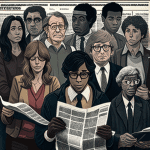
Most people think of literacy as something settled in childhood: you learn it in school, you master it, or you don’t. End of story. But that’s not how real life works, especially here, where economic instability, underfunded schools, incarceration, immigration, and trauma have shaped adult lives. Literacy doesn’t disappear if you don’t have it; it becomes something you learn to hide.
I’ve sat with parents who know every bus route in the city but can’t read the notice their child brought home from school. With adults who avoid the doctor unless absolutely necessary because paperwork feels riskier than illness. These are not edge cases. They are neighbors. They are part of the invisible infrastructure of Richmond’s economy.
Approximately 100,000 people in greater Richmond are unable to read at a functional level. So when I returned to Virginia to lead READ RVA, I expected to talk about education. Instead, I find myself talking about dignity.
One woman told me she’d spent years pretending to forget her glasses. Another said she lets her kids think she’s “too tired” to help with homework. A man in his forties explained how he hands restaurant menus directly to servers and orders “whatever’s good,” every time. None of them talked about low literacy— they talked about being careful. About not wanting to be exposed.
That’s the part most people miss: the constant calculation. Who can I ask? What can I avoid? How much of myself can I reveal today?
Richmond is a city that prides itself on grit and creativity, but there is a contradiction baked into that pride. We admire resilience without always asking what people have had to endure to develop it. Adult learners are some of the most resourceful people I know—not because they wanted to be, but because they had to be.
Literacy doesn’t suddenly fix a life. It doesn’t erase debt or guarantee a job with benefits. What it does is open doors that were never meant to be locked in the first place: the first email a parent can read from a teacher, the first lease they don’t sign blindly, the first time someone fills out a form without feeling their pulse in their ears.
One learner told me quietly, “I’m tired of guessing.” That sentence carries more weight than any statistic.
There’s a temptation in nonprofit narratives to frame change as dramatic transformation: before and after, darkness into light. But real change is slower and less cinematic. It looks like confidence inching forward. Like someone speaking up in a meeting. Like a parent asking a question instead of nodding along.
And it looks different for everyone. For some, learning to read is about work. For others, it’s about health or finally being able to read a book to a grandchild. What these adults share is not a lack of intelligence, but a lifetime of being told, directly or indirectly, that this wasn’t for them.
Adult literacy isn’t a feel good cause. It’s a reckoning. It forces us to confront how many of our systems depend on silence and shame to function smoothly. How often we mistake compliance for comprehension. How easy it is to design a city for people who already know how to navigate it.
If Richmond wants to be a place people can truly come home, we have to stop treating adult literacy as an afterthought: not a charity project, not a side door, but a core part of what it means to belong here.
Every time an adult decides to learn, they are rewriting an internal script that told them it was too late, or that they were the problem. That decision takes courage most of us will never be asked to summon. The least we can do is meet it with respect.
I still think about that man on Broad Street. I don’t know his name, or his story. I know only that for a moment, he trusted a stranger to read the world for him. Richmond is full of moments like that — quiet, human, easily missed.
We can do better than leaving people to navigate alone. But first, we have to be willing to see them.
Support RVA Magazine. Support Independent Media in Richmond.
At a time when media ownership is increasingly concentrated among corporations and the wealthy, RVA Magazine has remained one of Richmond’s few independent voices. Since 2005, the magazine has provided grassroots coverage of the city’s artists, musicians, and communities, documenting the culture that defines Richmond beyond the headlines.
But we can’t do this without you. A small donation, even as little as $2, one-time or recurring, helps us continue to produce honest, local coverage free from outside interference. Every dollar makes a difference. Your support keeps us going and keeps RVA’s creative spirit alive. Thank you for standing with independent media. DONATE HERE.
We’ve got merch HERE
Subscribe to the Substack HERE
And Reddit HERE
And YouTube HERE