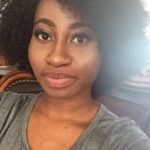
Finding the “American Dream” had always been a fantasy for this small town Ghanaian girl. I grew up in Mankessim, Ghana, and believed that leaving for America would result in a better, more prosperous life, but feared the unfamiliar. When I left my home at 16, it was jarring, but I was longing to see my mother, who had left nine years earlier to establish a life for us.
I was hoping to get to know the type of person she is, reestablish our mother and daughter relationship, and find happiness in America.
After watching movies like Mean Girls, High School Musical, and Hannah Montana, I thought I had a clear picture of how American high school kids lived–that everyone lived lavishly and worry-free. I believed America had no poverty.
It wasn’t until I arrived here that I realized everything I saw in movies was absurdly unrealistic. I had to wake up to reality–America is not like the movies, and within the first year of living in this country, I experienced total culture shock.
My first day at West Potomac High School was the saddest day of my life.
Everything that was normal to me in Ghana was the opposite in American culture, and adjusting to the American education system was my greatest challenge. Mispronouncing and spelling words incorrectly, struggling with how the bell system worked, wearing jeans to school rather than a school uniform felt too informal, styling my hair however I wanted was too casual, misunderstanding slang, the overly sweet food, the lack of physical discipline in school, and the cold winters were all bizarre adjustments. I struggled to adjust to Virginia’s weather, even beginning to develop severe migraines in response to my new environment. I had to stay home for most of the winter that year, something I remember when the migraines return each year like clockwork.

Sarafina and Her Cousin in Ghana
And then there was the bullying.
American kids constantly asked me to repeat myself anytime I spoke, so during lunch time I would often leave the cafeteria and sit in a classroom until my next class started, without eating. No one bothered to befriend me. Most kids were always busy on their phones, something that was strictly prohibited in Ghana.
As an African living in the U.S., I initially thought African Americans would be more welcoming since I look like them. I sought out other black students to find some refuge from the bullying, but soon found that many of them, particularly the Ghanaian students who had grown up in America, bullied me worst of all. It felt like a battle for social status, many calling me “FOB,” for Fresh Off the Boat.
Some of them assumed I was from the jungle, and looked down on me. Africans and African-American people here have developed their own diction, and the moment they realized I didn’t sound like them, they refused to accept me.
Communicating was one of the greatest challenges. Despite my remaining silent during most classes, everyone made fun of the new girl with the thick African accent. I vividly remember the day I went outside, called my mom, and burst into tears. I said, ‘I don’t want to do this anymore. I want to go back to my country. Kids here are mean.’ She told me not to worry and that everything would be okay, that I would adjust in a few months once I started watching the Disney channel regularly. I watched the Disney channel every day for a year and a half just to learn an American accent.
The way American students disrespect their teachers was shocking to me, both in high school and college. In Ghanaian schools, teachers assume the role of a parent and can discipline you without question. During my intense first week of high school, a kid misbehaved in class and the teacher told her to stop. Out of anger, the student responded, ‘You can’t tell me what to do because you ain’t my momma.’ The teacher threatened her with a write-up, but I wondered, how could she disrespect her teacher and not get punished? No child in Ghana can look his or her teacher in the eye and say what she said.
After a year passed, kids still asked if I used to live in trees in Africa; some even asked if I walked around naked or sat around a fire. Many Americans don’t read about other countries or even leave their own small towns. They live in a bubble.
The United States is known as a “melting pot” of immigrants from around the globe. But this powerful ideal coexists along an anti-immigration sentiment that has persisted throughout the nation’s history. Immigrants see America as an escape from their very real problems, such as past or future persecution based on race, religion, nationality, or membership to a particular social group or holding a certain political opinion, yet when we arrive, we are mistreated due to the false stereotypes that exist in this country.
As an African, I’ve dealt with numerous preposterous stereotypes, like Africa is a disease-ridden land, that everyone in Africa lives in a mud house in the middle of nowhere, or that everyone in Africa has AIDS. The idea that the entire continent of Africa is a disease-ridden land of mud huts is a myth and demeaning to Africans living in the U.S. or any part of the world.

Sarafina, Now a VCU Student in Richmond
Immigrants often feel they are “others” when encountering U.S. culture for the first time. Unless you are already part of a group, you immediately feel like an outsider. On discovering this, I spent my time finding and befriending other Ghanaians as opposed to immediately assimilating.
Humans are humans, regardless of what they look or sound like. Yet in America, there is a heavy emphasis on color and skin tone as it relates to ethnicity. Being bullied for my accent was devastating. What was shocking is it came from people who look exactly like me.
Americans struggle with the concept of being a “nation of immigrants,” even as each incoming community has contributed its respective heritage and culture to American society. Sometimes I want to go back to Ghana just so I can express myself without judgment from others and the freedom to simply be.